"My old grandpaw always said, You can't have too many arrow slits." One imagines many a medieval castellan saying something like this as he added to and remodeled his castle.
Before the fourteenth-century invention of gunpowder and the resulting cannon ports, a castle would have numerous holes and slits from which the defenders could fight back against attackers. These openings were small, virtually impossible to target from the outside. A gatehouse would typically have holes in the ceiling, through which any enemy who broke down the gate and got into the gatehouse could be shot--or have stones dropped on him. But arrow slits were the principal defense openings.
An arrow slit, as can be seen in this picture (Brancion castle in Burgundy), was very narrow on the outside, but wide on the inside, so that the archer could stand to the left or right, wherever he got the best shot at the attackers. Even if an excellent archer among the attackers (who, remember, would be shooting upward) was able to hit the arrow slit, he might miss the defender unless the latter was standing right in the middle.
An arrow slit does not let in very much light, yet they would be the only openings in the lower storeys of a castle. There wouldn't even be a door at ground level for the big central tower (donjon). Rather, there would be a wooden staircase on the outside of the tower that could be fired or cut if attackers got through the outer wall.
As a result, castles were dark for the most part. However, the people who lived there liked having light as much as anybody. Thus, upper stories had window seats, where one could sit by a large window, reading, sewing, talking, or just enjoying getting some rays. The windows did not have glass until the late Middle Ages; before then they would either be closed by shutters or be covered with greased parchment.
Above are some very elegant window seats which would have had fancy late medieval glass windows (also from Brancion castle).
© C. Dale Brittain 2018
For more on medieval castles, see my ebook, Positively Medieval: Life and Society in the Middle Ages, available from Amazon and other e-tailers.
Wednesday, January 3, 2018
Saturday, December 16, 2017
The Christmas Story
We all know the Christmas story. Even those who are not Christians get it drummed into them this time of year. Mary, a virgin, conceived, which might seem like an issue already, but then in her ninth month she and Joseph, her celibate husband, had to go to Bethlehem to be entered on the tax rolls, and she gave birth in a stable because there wasn't a hotel room free anywhere. The baby, Jesus, was shortly visited by shepherds, who'd been told about him by an angel. Less than two weeks later, three kings arrived from the East with rich gifts, having been following a star that stood over the stable. Evil King Herod wanted to kill the future King of the Jews that the three eastern kings told him about, but Mary and Joseph escaped into Egypt.
The story of course has its roots in the Bible, but the version everyone knows, the version I just gave, is a composite of two stories written to be quite different from each other. It was medieval thinkers, who just knew that the Bible told a single, unified story, who put them together in the form we now take for granted. This was the story they had carved on their churches. And who are we to argue with them? After all, Christianity is far more than the Bible. Medieval thinkers assumed that a thousand years or more of tradition also had validity, or God would not have allowed it.
(Below is a twelfth-century carving of Mary and Joseph escaping into Egypt.)
Get out your New Testament and follow along as we look at the roots of this tradition.
The story of Jesus's birth (the Nativity) is in only two of the four Gospels, Matthew and Luke. Mark and John start with Jesus as an adult. The name Jesus, by the way, is a variation of Jesse, the name of King David's father. Everyone agreed that Jesus was of the house of Jesse. Curiously, although Matthew starts with the line of descent from Jesse to Jesus, it goes not through Mary but through Joseph. What about the virgin birth? After all, it fulfilled a prophecy. Let's keep moving.
Matthew clearly wrote to persuade the Jews that Jesus was the Messiah who had first been foretold some five centuries earlier. He kept on noting that aspects of Jesus's birth fulfilled an aspect of the old prophecies. Medieval thinkers said, Well, of course it did. No surprises there!
In Matthew, Jesus was born in Bethlehem because that's where Joseph and Mary lived. They had a house. It's also where prophets had said the ruler of God's chosen people would come from. Off in the East, some wise men (or mages, magi, the Bible doesn't call them kings and doesn't say there were three of them) had their own prophecy about the king of the Jews. It took them maybe a year to figure it out and get to Judea, following a star. They stopped in Jerusalem to ask directions, where King Herod (a puppet of the Romans, history tells us, though Matthew doesn't go into detail) was distraught to learn of the birth of a King of the Jews, which, naturally, he found threatening.
Herod sent the wise men on their way with false comments about wanting to worship the baby king himself. In Bethlehem they presented their gifts, gold, frankincense, and myrrh, three gifts that probably led to the conclusion that there were three magi, rich enough that they were considered kings. The magi were warned against Herod so didn't go back to Jerusalem to tell where the baby lived, but Herod decided to kill all babies in Judea under the age of two anyway. Mary and Joseph and toddler Jesus escaped into Egypt, fulfilling two prophecies, one about death of children, the other about "out of Egypt." When they came back from Egypt, they settled in Nazareth, not wanting to go back to Bethlehem in Judea, where Herod's son was ruling.
Luke's story is very different. It starts with John the Baptist's parents (a section usually not read during Christmas Eve service) and has a long section on the Annunciation, where the angel tells Mary she will conceive of the Holy Spirit, details not in Matthew, which is much more from Joseph's point of view (though both agreed on the virgin birth). According to Luke, Mary and Joseph had a house in Nazareth, rather than Bethlehem, though they were there in Bethlehem, in the stable, because of the proclamation about tax rolls. Jesus clearly came from Nazareth, so all stories had to have him grow up there, but he had to be born in Bethlehem because of the prophecy.
Very shortly after Jesus's birth according to Luke, the shepherds showed up at the stable, told by an angel that the Messiah was born. Although nowhere in the Bible is the Nativity dated, Luke's comment about shepherds watching their flocks by night suggests he thought it was in the spring, lambing season. You will notice there are no wise men in Luke, just as there were no shepherds in Matthew. The shepherds in Luke spread the word, but apparently word never got to Herod, because Mary and Joseph went to Jerusalem without any problem a little later, to sacrifice at the Temple according to Jewish law. Herod in this version doesn't slaughter anybody, and Mary and Joseph went peacefully home to Nazareth.
For more on Christmas and how medieval (and modern!) people celebrate it, see my ebook essay, available on Amazon and other e-tailers.
© C. Dale Brittain 2017
The story of course has its roots in the Bible, but the version everyone knows, the version I just gave, is a composite of two stories written to be quite different from each other. It was medieval thinkers, who just knew that the Bible told a single, unified story, who put them together in the form we now take for granted. This was the story they had carved on their churches. And who are we to argue with them? After all, Christianity is far more than the Bible. Medieval thinkers assumed that a thousand years or more of tradition also had validity, or God would not have allowed it.
(Below is a twelfth-century carving of Mary and Joseph escaping into Egypt.)
Get out your New Testament and follow along as we look at the roots of this tradition.
The story of Jesus's birth (the Nativity) is in only two of the four Gospels, Matthew and Luke. Mark and John start with Jesus as an adult. The name Jesus, by the way, is a variation of Jesse, the name of King David's father. Everyone agreed that Jesus was of the house of Jesse. Curiously, although Matthew starts with the line of descent from Jesse to Jesus, it goes not through Mary but through Joseph. What about the virgin birth? After all, it fulfilled a prophecy. Let's keep moving.
Matthew clearly wrote to persuade the Jews that Jesus was the Messiah who had first been foretold some five centuries earlier. He kept on noting that aspects of Jesus's birth fulfilled an aspect of the old prophecies. Medieval thinkers said, Well, of course it did. No surprises there!
In Matthew, Jesus was born in Bethlehem because that's where Joseph and Mary lived. They had a house. It's also where prophets had said the ruler of God's chosen people would come from. Off in the East, some wise men (or mages, magi, the Bible doesn't call them kings and doesn't say there were three of them) had their own prophecy about the king of the Jews. It took them maybe a year to figure it out and get to Judea, following a star. They stopped in Jerusalem to ask directions, where King Herod (a puppet of the Romans, history tells us, though Matthew doesn't go into detail) was distraught to learn of the birth of a King of the Jews, which, naturally, he found threatening.
Herod sent the wise men on their way with false comments about wanting to worship the baby king himself. In Bethlehem they presented their gifts, gold, frankincense, and myrrh, three gifts that probably led to the conclusion that there were three magi, rich enough that they were considered kings. The magi were warned against Herod so didn't go back to Jerusalem to tell where the baby lived, but Herod decided to kill all babies in Judea under the age of two anyway. Mary and Joseph and toddler Jesus escaped into Egypt, fulfilling two prophecies, one about death of children, the other about "out of Egypt." When they came back from Egypt, they settled in Nazareth, not wanting to go back to Bethlehem in Judea, where Herod's son was ruling.
Luke's story is very different. It starts with John the Baptist's parents (a section usually not read during Christmas Eve service) and has a long section on the Annunciation, where the angel tells Mary she will conceive of the Holy Spirit, details not in Matthew, which is much more from Joseph's point of view (though both agreed on the virgin birth). According to Luke, Mary and Joseph had a house in Nazareth, rather than Bethlehem, though they were there in Bethlehem, in the stable, because of the proclamation about tax rolls. Jesus clearly came from Nazareth, so all stories had to have him grow up there, but he had to be born in Bethlehem because of the prophecy.
Very shortly after Jesus's birth according to Luke, the shepherds showed up at the stable, told by an angel that the Messiah was born. Although nowhere in the Bible is the Nativity dated, Luke's comment about shepherds watching their flocks by night suggests he thought it was in the spring, lambing season. You will notice there are no wise men in Luke, just as there were no shepherds in Matthew. The shepherds in Luke spread the word, but apparently word never got to Herod, because Mary and Joseph went to Jerusalem without any problem a little later, to sacrifice at the Temple according to Jewish law. Herod in this version doesn't slaughter anybody, and Mary and Joseph went peacefully home to Nazareth.
For more on Christmas and how medieval (and modern!) people celebrate it, see my ebook essay, available on Amazon and other e-tailers.
© C. Dale Brittain 2017
Sunday, December 3, 2017
Demons
Medieval people worried about demons. These were malevolent beings, seeking the destruction of souls. They would inspire people to do things they shouldn't do, tempt them with enticing promises, and harass the virtuous and godly. They loved to lurk in latrines.
The Bible doesn't have a lot to say about demons, although Jesus is recorded as having cast demons out of people, demons which made them ill or crazy. But there was plenty there for medieval people to build on. Demons were usually invisible, but they could take visible shape, such as like a black dog or other animal. A knight riding to commit a foul deed might abruptly discover that what he thought was a horse was actually a demon, planning to toss him in the nearest river.
But most commonly demons were depicted as vaguely human, usually with horns, sometimes with tails. One of the things demons loved best was hurting people, so carvings on churches often depict them doing so with great gusto.
The above grinning demon is from the eleventh-century monastery of Tournus.
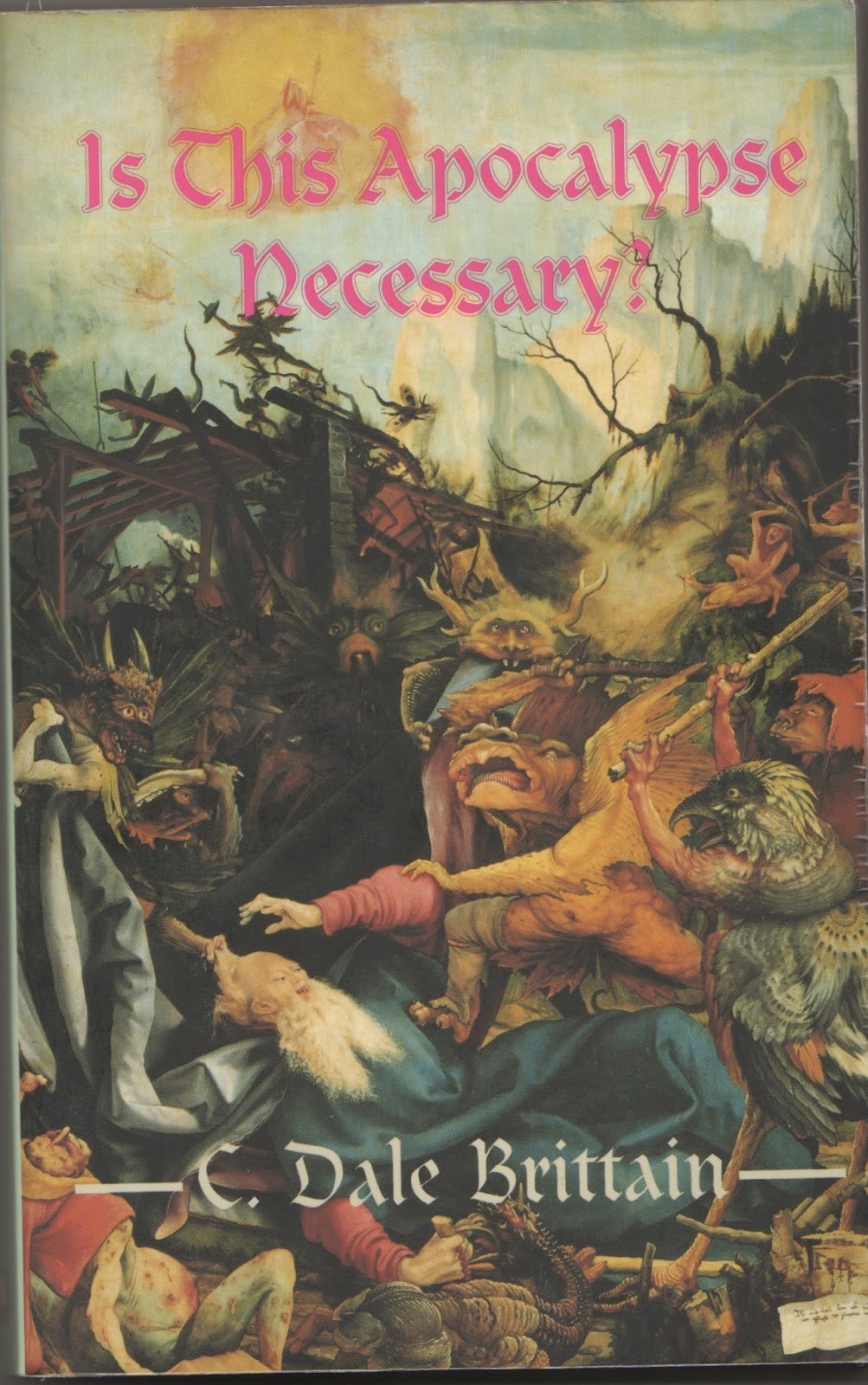
Some of what were described as "temptations" were actually very painful. I guess the idea was that people would promise the demons anything to make them stop. Below is a late medieval painting of the "temptation of Saint Anthony." The demons are having a blast, but Anthony is clearly not. I used this image for the cover of my fantasy novel, "Is This Apocalypse Necessary?" which (among many other things) includes demons.
Medieval people didn't really make deals with the devil in a nineteenth-century, Faust kind of way, because they realized how little of value the cruel demons could actually offer. Instead, demons stood by, ready to take souls away to hell, as in the below image of a rich, dying miser whose soul is being snatched while his moneybags are useless below his bed. (It illustrates the story of Dives and Lazarus.)
© C. Dale Brittain 2017
For more on demons and medieval religion, see my ebook, Positively Medieval: Life and Society in the Middle Ages, available from Amazon and other e-tailers.
The Bible doesn't have a lot to say about demons, although Jesus is recorded as having cast demons out of people, demons which made them ill or crazy. But there was plenty there for medieval people to build on. Demons were usually invisible, but they could take visible shape, such as like a black dog or other animal. A knight riding to commit a foul deed might abruptly discover that what he thought was a horse was actually a demon, planning to toss him in the nearest river.
But most commonly demons were depicted as vaguely human, usually with horns, sometimes with tails. One of the things demons loved best was hurting people, so carvings on churches often depict them doing so with great gusto.
The above grinning demon is from the eleventh-century monastery of Tournus.
Some of what were described as "temptations" were actually very painful. I guess the idea was that people would promise the demons anything to make them stop. Below is a late medieval painting of the "temptation of Saint Anthony." The demons are having a blast, but Anthony is clearly not. I used this image for the cover of my fantasy novel, "Is This Apocalypse Necessary?" which (among many other things) includes demons.
Medieval people didn't really make deals with the devil in a nineteenth-century, Faust kind of way, because they realized how little of value the cruel demons could actually offer. Instead, demons stood by, ready to take souls away to hell, as in the below image of a rich, dying miser whose soul is being snatched while his moneybags are useless below his bed. (It illustrates the story of Dives and Lazarus.)
© C. Dale Brittain 2017
For more on demons and medieval religion, see my ebook, Positively Medieval: Life and Society in the Middle Ages, available from Amazon and other e-tailers.
Monday, November 27, 2017
My First Kingdom
I've just published a new paperback, entitled "My First Kingdom."
It's a collection (omnibus) of the first three Royal Wizard of Yurt novels and is a big, hefty book, 750 pages long. It's available on Amazon (click here), and should shortly be available through B&N or your local bookseller. It's already available as an ebook from Amazon for Kindle, as well as available on the Nook, Kobo, and iTunes platforms.
One of the advantages of indie publishing, which is what I'm doing, is that one has complete control over what gets published. I've been thinking for close to 20 years that it would be good to have a big fat paperback that included the first three Yurt books, and indeed I've had the title in mind for that long. Now at last I've made it come about.
One of the challenges was getting a good cover. I hired fantasy artist Cortney Skinner, whose work I've always liked, and he and I worked out the image. It shows Daimbert, my wizard hero, and the old, retired wizard of Yurt trying to fight a dragon who has invaded the castle. Daimbert is attempting, without much success, to make himself invisible (his legs have disappeared but that's it), and the old wizard is distracting the dragon with illusory red balls. So far it isn't working too well. The scene appears in the first of the three books, "A Bad Spell in Yurt."
Here's a sample from the first chapter of "Bad Spell" to whet your interest.
© C. Dale Brittain 2017
It's a collection (omnibus) of the first three Royal Wizard of Yurt novels and is a big, hefty book, 750 pages long. It's available on Amazon (click here), and should shortly be available through B&N or your local bookseller. It's already available as an ebook from Amazon for Kindle, as well as available on the Nook, Kobo, and iTunes platforms.
One of the advantages of indie publishing, which is what I'm doing, is that one has complete control over what gets published. I've been thinking for close to 20 years that it would be good to have a big fat paperback that included the first three Yurt books, and indeed I've had the title in mind for that long. Now at last I've made it come about.
One of the challenges was getting a good cover. I hired fantasy artist Cortney Skinner, whose work I've always liked, and he and I worked out the image. It shows Daimbert, my wizard hero, and the old, retired wizard of Yurt trying to fight a dragon who has invaded the castle. Daimbert is attempting, without much success, to make himself invisible (his legs have disappeared but that's it), and the old wizard is distracting the dragon with illusory red balls. So far it isn't working too well. The scene appears in the first of the three books, "A Bad Spell in Yurt."
Here's a sample from the first chapter of "Bad Spell" to whet your interest.
I was not a very good wizard. But it was
not a very big kingdom. I assumed I was the only person to answer their ad, for
in a short time I had a letter back from the king’s constable, saying the job
was mine if I still wanted it, and that I should report to take up the post of
Royal Wizard in six weeks.
It took most of the six weeks to grow in my beard,
and then I dyed it grey to make myself look older. Two days before leaving for
my kingdom, I went down to the emporium to buy a suitable wardrobe.
Of course at the emporium they knew all about us
young wizards from the wizards’ school. They looked at us dubiously, took our
money into the next room to make sure it stayed money even when we weren’t
there, and tended to count the items on the display racks in a rather
conspicuous way. But I knew the manager of the clothing department—he’d even
helped me once pick out a Christmas present for my grandmother, which I think
endeared me to him as much as to her.
He was on the phone when I came in. “What do you
mean, you won’t take it back? But our buyer never ordered it!” While waiting
for him, I picked out some black velvet trousers, just the thing, I thought, to
give me a wizardly flair.
The manager slammed down the phone. “So what am I
supposed to do with this?” he demanded of no one in particular. “This”
was a shapeless red velvet pullover, with some rather tattered white fur at the
neck. It might have been intended to be part of a Father Noel costume.
I was entranced. “I’ll take it!”
“Are you sure? But what will you do with it?”
“I’m going to be a Royal Wizard. It will help me
strike the right note of authority and mystery.”
“Speaking of mystery, what’s all the fuzzy stuff
on your chin?”
I was proud of my beard, but since he gave me the
pullover for almost nothing, I couldn’t be irritated. When I left for my
kingdom, I felt resplendent in velvet, red for blood and black for the powers
of darkness.
It was only two hundred miles, and probably most
of the young wizards would have flown themselves, but I insisted on the air
cart. “I need to make the proper impression of grandeur when I arrive,” I said.
Besides—and they all knew it even though I didn’t say it—I wasn’t sure I could
fly that far.
The air cart was the skin of a purple beast that
had been born flying. Long after the beast was dead, its skin continued to fly,
and it could be guided by magic commands. It brought me steeply up from the
wizards’ complex at the center of the City, and I looked back as the white city
spires fell away. It had been a good eight years, but I felt ready for new
challenges. We soared across plains, forests, and hills all the long afternoon,
before finally banking steeply over what I had been calling “my” kingdom for
the last six weeks.
From above there scarcely seemed to be more to the
kingdom than a castle, for beyond the castle walls there was barely room for
the royal fields and pastures before thick green woods closed in. A bright
garden lay just outside the castle walls, and pennants snapped from all the
turrets. The air cart dipped, folded its wings, and set me down with a bump in
the courtyard.
I looked around and loved
it at once. It was a perfect child’s toy of a castle, the stone walls freshly
whitewashed and the green shutters newly painted. The courtyard was a
combination of clean-swept cobbles, manicured flower beds, and tidy gravel
paths. On the far side of the courtyard, a well-groomed horse put his head over
a white half-door and whinnied at me.
© C. Dale Brittain 2017
Monday, November 20, 2017
Beer and burial in the early Middle Ages
One of the big questions in early medieval British archaeology is the change in pottery. What we now think of as England had become a thoroughly Romanized part of the Roman Empire, Christian, Latin-speaking elites, villas with mosaics, hot baths. (See more on this here.) Pottery was professionally made, smooth, thrown on a wheel and thus perfectly symmetrical, fully glazed, fired in a kiln.
But in the fifth century a different kind of pottery began to appear, shaped by hand but not on a wheel, thus not nearly as symmetrical (though it might be decorated), glazed on the outside but not the inside, fired in a bonfire rather than a kiln. (One can tell the difference because a kiln gets a lot hotter, being enclosed, and the clay fires much harder.) Why the change?
Now the easy answer was always that the Anglo-Saxon invaders brought a cruder way of making pots with them. But this only makes sense if the local populations was completely replaced by the newcomers. And in fact for at least a generation both kinds of pots were used, so there must have been more to it than Celts fleeing with their symmetrical pots while crude Germans and crude pots replaced them.
To further complicate the issue, most of the hand-built pots that archaeologists have discovered were used to bury cremated bodies. And some of the pots have trace elements on the interior surface that suggests they were used for making beer. The Romans had believed in cremation (though much less so once they became Christian), whereas Germanic peoples often buried people in elaborate graves with grave-goods, so this further messes up any effort to explain the change in pots by changes in the population.
One way to explain this is to start not by supposing a change in population but rather a change in who was in charge and who made the beer. While Romanized lords ruled the villas, they tended to have the beer made in industrial amounts. They then distributed it to their tenants, who were I'm sure suitably grateful.
But if the Anglo-Saxons did not completely replace the local Celtic population, they certainly did a number on the lords in the villas. Who was going to make the beer? (And it wasn't as if they could drink wine instead--England is not really warm enough for wine grapes, even now, and wine imports from the Continent had stopped a few generations earlier.)
Beer making fell to the local women. With no lords in the villas, the locals had to figure things out for themselves. And one thing they seem to have figured out is that getting beer to ferment needs yeast, which they couldn't see (it's a microorganism), but which they knew was in bakeries or, and this was the key issue, in containers that had been used to brew beer before. (That is, they didn't specifically know about yeast, but they knew about fermenting and getting it started.) And they certainly knew that pots unglazed on the inside were more likely to retain the "fermenting principle."
So it may well be that women made these "cruder" pots specifically to brew beer, even while Roman-style pots were still being made for other purposes. Because they were fired at a lower temperature (better for a pot not entirely glazed), they were more fragile and couldn't be counted on to last more than a year or so in use. Pots archaeologists have found generally had a crack or leak. But what more appropriate to use as a container for a woman's cremated remains than the kind of pot in which women had been brewing beer? An intriguing possibility!
This blog post was inspired by the ideas of Andrew Welton, of the University of Florida.
© C. Dale Brittain 2017
For more on Romans and Anglo-Saxons, see my ebook, Positively Medieval: Life and Society in the Middle Ages, available on Amazon and other ebook platforms.
But in the fifth century a different kind of pottery began to appear, shaped by hand but not on a wheel, thus not nearly as symmetrical (though it might be decorated), glazed on the outside but not the inside, fired in a bonfire rather than a kiln. (One can tell the difference because a kiln gets a lot hotter, being enclosed, and the clay fires much harder.) Why the change?
Now the easy answer was always that the Anglo-Saxon invaders brought a cruder way of making pots with them. But this only makes sense if the local populations was completely replaced by the newcomers. And in fact for at least a generation both kinds of pots were used, so there must have been more to it than Celts fleeing with their symmetrical pots while crude Germans and crude pots replaced them.
To further complicate the issue, most of the hand-built pots that archaeologists have discovered were used to bury cremated bodies. And some of the pots have trace elements on the interior surface that suggests they were used for making beer. The Romans had believed in cremation (though much less so once they became Christian), whereas Germanic peoples often buried people in elaborate graves with grave-goods, so this further messes up any effort to explain the change in pots by changes in the population.
One way to explain this is to start not by supposing a change in population but rather a change in who was in charge and who made the beer. While Romanized lords ruled the villas, they tended to have the beer made in industrial amounts. They then distributed it to their tenants, who were I'm sure suitably grateful.
But if the Anglo-Saxons did not completely replace the local Celtic population, they certainly did a number on the lords in the villas. Who was going to make the beer? (And it wasn't as if they could drink wine instead--England is not really warm enough for wine grapes, even now, and wine imports from the Continent had stopped a few generations earlier.)
Beer making fell to the local women. With no lords in the villas, the locals had to figure things out for themselves. And one thing they seem to have figured out is that getting beer to ferment needs yeast, which they couldn't see (it's a microorganism), but which they knew was in bakeries or, and this was the key issue, in containers that had been used to brew beer before. (That is, they didn't specifically know about yeast, but they knew about fermenting and getting it started.) And they certainly knew that pots unglazed on the inside were more likely to retain the "fermenting principle."
So it may well be that women made these "cruder" pots specifically to brew beer, even while Roman-style pots were still being made for other purposes. Because they were fired at a lower temperature (better for a pot not entirely glazed), they were more fragile and couldn't be counted on to last more than a year or so in use. Pots archaeologists have found generally had a crack or leak. But what more appropriate to use as a container for a woman's cremated remains than the kind of pot in which women had been brewing beer? An intriguing possibility!
This blog post was inspired by the ideas of Andrew Welton, of the University of Florida.
© C. Dale Brittain 2017
For more on Romans and Anglo-Saxons, see my ebook, Positively Medieval: Life and Society in the Middle Ages, available on Amazon and other ebook platforms.
Monday, November 13, 2017
Beads
Nobody these days thinks much about beads. Beading (or making simple jewelry from them) can be fun, but it is not something we think of in terms of trade routes and great expense. In the early Middle Ages, things were different.
Beads were considered a fine form of decoration for women and, to a somewhat lesser extent, to men. In the late Roman Empire those in the West who could afford it wore necklaces of beads made from semi-precious stones. Beads could also be made from amber, from non-precious stones, even from horn. (Plastic was centuries in the future.) But the most important kind of material was glass.
This changed in the seventh century. With the rise of Islam and the resultant breakdown of Mediterranean trade routes, it became hard for the West to get glass. Beads found in graves from that period tended to be made instead from bone, horn, even fired clay.
This changed with the Vikings. As I have noted before, they established long-distance overland trade routes that reached all the way from Scandinavia to Byzantium. One of the most important things that they brought to the west was glass.
A lot of the glass was already in the shape of beads. Other glass could be melted down and shaped into beads (most commonly short tiny cylinders in shape, rather than the round form we take for granted). The glass came in all sorts of different colors.
The Vikings, who set up trade colonies in the West by the ninth century, once the fun of constant raiding wore off (and they realized that one could make consistent money year after year through trade, whereas a raid usually couldn't be repeated), traded beads. Beads made excellent trade goods, because everyone wanted some, they were (relatively) inexpensive per unit, so everyone could afford at least some, and they were fairly lightweight, making them easier to transport than say metal or stone.
Big heaps of early medieval glass beads have been found in Scandinavian harbors, presumably from a box being loaded that broke loose and dumped. It would not have been worth it at the time to send divers down into the murky, icy waters to try to pick up beads one by one.
Do you find it hard to picture a Viking warrior wearing a necklace of glass beads? Readjust your thinking.
Some of the ideas in this post were inspired by the work of Matthew Delvaux of Boston College.
© C. Dale Brittain 2017
For more on Vikings, see my ebook, Positively Medieval: Life and Society in the Middle Ages, available on Amazon and other ebook platforms.
Beads were considered a fine form of decoration for women and, to a somewhat lesser extent, to men. In the late Roman Empire those in the West who could afford it wore necklaces of beads made from semi-precious stones. Beads could also be made from amber, from non-precious stones, even from horn. (Plastic was centuries in the future.) But the most important kind of material was glass.
This changed in the seventh century. With the rise of Islam and the resultant breakdown of Mediterranean trade routes, it became hard for the West to get glass. Beads found in graves from that period tended to be made instead from bone, horn, even fired clay.
This changed with the Vikings. As I have noted before, they established long-distance overland trade routes that reached all the way from Scandinavia to Byzantium. One of the most important things that they brought to the west was glass.
A lot of the glass was already in the shape of beads. Other glass could be melted down and shaped into beads (most commonly short tiny cylinders in shape, rather than the round form we take for granted). The glass came in all sorts of different colors.
The Vikings, who set up trade colonies in the West by the ninth century, once the fun of constant raiding wore off (and they realized that one could make consistent money year after year through trade, whereas a raid usually couldn't be repeated), traded beads. Beads made excellent trade goods, because everyone wanted some, they were (relatively) inexpensive per unit, so everyone could afford at least some, and they were fairly lightweight, making them easier to transport than say metal or stone.
Big heaps of early medieval glass beads have been found in Scandinavian harbors, presumably from a box being loaded that broke loose and dumped. It would not have been worth it at the time to send divers down into the murky, icy waters to try to pick up beads one by one.
Do you find it hard to picture a Viking warrior wearing a necklace of glass beads? Readjust your thinking.
Some of the ideas in this post were inspired by the work of Matthew Delvaux of Boston College.
© C. Dale Brittain 2017
For more on Vikings, see my ebook, Positively Medieval: Life and Society in the Middle Ages, available on Amazon and other ebook platforms.
Friday, November 10, 2017
Anglo-Norman Kings
One sometimes hears that medieval kingship was a simple matter of inheritance--the king was succeeded by his eldest son, and that was that. The kings of England totally undercut that model. From the middle of the eleventh century to the early thirteenth century, a grand total of 1 king became king by simple father-to-oldest-son inheritance.
These kings are usually called Anglo-Norman, because they had been dukes of Normandy (in France) before becoming kings of England and held onto the duchy.
William the Conqueror of course became king of England in 1066 by conquest (his nickname is a clue...). When he died, he was succeeded not by his oldest son, Robert Curthose, but by his second son, William II, also called William Rufus. Robert Curthose became duke of Normandy. When William Rufus died without children in 1100, he was succeeded by his youngest brother, Henry I.
Robert Curthose was in Jerusalem at the time, on the First Crusade. He was distraught, thinking that he ought to succeed as king. He came back to Europe, fought Henry for half a dozen years, lost, and ended up imprisoned for the rest of his life. So much for brotherly love.
Henry I had no shortage of sons. He had over a dozen. There was no problem there, except for one crucial issue. All but one of them was illegitimate. His one legitimate son was lost at sea (a group of young men trying to cross the English Channel during rough weather, all probably DUI). There was no way Henry could make one of his other sons king, even though several of them became bishops, and all of them had comfortable lives. So he chose his daughter Mathilda to succeed.
Mathilda was supposed to be king, not queen. She in fact usually called herself Empress, because she had been briefly married to the Holy Roman Emperor, though he had died without them having children. She had married a second time, to Geoffrey, count of Anjou. The county of Anjou is next to Normandy, and the Angevins had decided Normandy was rightfully theirs.
The great Anglo-Norman lords hated Mathilda, partly because she was a woman, partly because they hated Geoffrey of Anjou. They quickly declared they hadn't really sworn to support Mathilda and went instead for her cousin Stephen, son of a daughter of William the Conqueror. England now calls Stephen the rightful king, so Henry I was succeeded by his nephew.
Mathilda spent much of the next two decades fighting Stephen. She never won, but at the end of his life, when he had no children to succeed (what's with these guys? low sperm count?), he agreed that Mathilda's son, Henry II, would become king after him. So Stephen was succeeded by a first cousin once removed, a man who was already duke of Normandy and count of Anjou. Henry also acquired Aquitaine, essentially the southwest quarter of France, through his marriage.
Henry II and his wife, Eleanor of Aquitaine, had five sons. (No low sperm count there!) Though their oldest son, William, died very young, and the second, Young Henry, died as a young man while his father was still alive, the third son, Richard the Lionheart, was alive and ready to succeed when Henry II died in 1189. This was the first time an English king was succeeded by his oldest surviving son since before the Conquest.
But Richard had no children, so he was succeeded by his younger brother, John. When John died in 1216, his young son succeeded as Henry III, and (at least for a little while) there was a sense that this father-son inheritance should be the model.
Henry II and his five sons had not had a happy Dad-and-lad relationship. Richard and Geoffrey (the fourth son) rebelled against their father. They also did not get along with each other. Geoffrey was killed in a tournament, and his young son, named Arthur, mysteriously vanished after visiting his Uncle John. When Richard the Lionheart was preparing to go on the Third Crusade, he seems to have wanted to make John come with him, fearing that if John were left behind he would seize the English throne.
Although the King Arthur stories that developed in the twelfth century (which owe essentially nothing to the fifth century) cannot be seen as simple metaphor or roman-Ã -clef, there are similarities between the King Arthur of the stories and the real Anglo-Norman kings. Arthur in the stories never had a legitimate son, like Henry I. He was rebelled against by his son Mordred, like Henry II. Mordred was the product of an incestuous union, Arthur's nephew as well as son, which made it worse--and evoked nephews in royal succession (at least none of the Anglo-Norman kings were thought to have had incestuous relations with their sisters). The first people who heard the King Arthur stories saw parallels with their own line of kings.
© C. Dale Brittain 2017
For more on Anglo-Norman kings and other aspects of life in the Middle Ages, see the ebook, Positively Medieval, available from Amazon.
These kings are usually called Anglo-Norman, because they had been dukes of Normandy (in France) before becoming kings of England and held onto the duchy.
William the Conqueror of course became king of England in 1066 by conquest (his nickname is a clue...). When he died, he was succeeded not by his oldest son, Robert Curthose, but by his second son, William II, also called William Rufus. Robert Curthose became duke of Normandy. When William Rufus died without children in 1100, he was succeeded by his youngest brother, Henry I.
Robert Curthose was in Jerusalem at the time, on the First Crusade. He was distraught, thinking that he ought to succeed as king. He came back to Europe, fought Henry for half a dozen years, lost, and ended up imprisoned for the rest of his life. So much for brotherly love.
Henry I had no shortage of sons. He had over a dozen. There was no problem there, except for one crucial issue. All but one of them was illegitimate. His one legitimate son was lost at sea (a group of young men trying to cross the English Channel during rough weather, all probably DUI). There was no way Henry could make one of his other sons king, even though several of them became bishops, and all of them had comfortable lives. So he chose his daughter Mathilda to succeed.
Mathilda was supposed to be king, not queen. She in fact usually called herself Empress, because she had been briefly married to the Holy Roman Emperor, though he had died without them having children. She had married a second time, to Geoffrey, count of Anjou. The county of Anjou is next to Normandy, and the Angevins had decided Normandy was rightfully theirs.
The great Anglo-Norman lords hated Mathilda, partly because she was a woman, partly because they hated Geoffrey of Anjou. They quickly declared they hadn't really sworn to support Mathilda and went instead for her cousin Stephen, son of a daughter of William the Conqueror. England now calls Stephen the rightful king, so Henry I was succeeded by his nephew.
Mathilda spent much of the next two decades fighting Stephen. She never won, but at the end of his life, when he had no children to succeed (what's with these guys? low sperm count?), he agreed that Mathilda's son, Henry II, would become king after him. So Stephen was succeeded by a first cousin once removed, a man who was already duke of Normandy and count of Anjou. Henry also acquired Aquitaine, essentially the southwest quarter of France, through his marriage.
Henry II and his wife, Eleanor of Aquitaine, had five sons. (No low sperm count there!) Though their oldest son, William, died very young, and the second, Young Henry, died as a young man while his father was still alive, the third son, Richard the Lionheart, was alive and ready to succeed when Henry II died in 1189. This was the first time an English king was succeeded by his oldest surviving son since before the Conquest.
But Richard had no children, so he was succeeded by his younger brother, John. When John died in 1216, his young son succeeded as Henry III, and (at least for a little while) there was a sense that this father-son inheritance should be the model.
Henry II and his five sons had not had a happy Dad-and-lad relationship. Richard and Geoffrey (the fourth son) rebelled against their father. They also did not get along with each other. Geoffrey was killed in a tournament, and his young son, named Arthur, mysteriously vanished after visiting his Uncle John. When Richard the Lionheart was preparing to go on the Third Crusade, he seems to have wanted to make John come with him, fearing that if John were left behind he would seize the English throne.
Although the King Arthur stories that developed in the twelfth century (which owe essentially nothing to the fifth century) cannot be seen as simple metaphor or roman-Ã -clef, there are similarities between the King Arthur of the stories and the real Anglo-Norman kings. Arthur in the stories never had a legitimate son, like Henry I. He was rebelled against by his son Mordred, like Henry II. Mordred was the product of an incestuous union, Arthur's nephew as well as son, which made it worse--and evoked nephews in royal succession (at least none of the Anglo-Norman kings were thought to have had incestuous relations with their sisters). The first people who heard the King Arthur stories saw parallels with their own line of kings.
© C. Dale Brittain 2017
For more on Anglo-Norman kings and other aspects of life in the Middle Ages, see the ebook, Positively Medieval, available from Amazon.
Subscribe to:
Posts (Atom)