Showing posts with label Dives and Lazarus. Show all posts

Sunday, December 3, 2017

Demons

Medieval people worried about demons.  These were malevolent beings, seeking the destruction of souls.  They would inspire people to do things they shouldn't do, tempt them with enticing promises, and harass the virtuous and godly.  They loved to lurk in latrines.

The Bible doesn't have a lot to say about demons, although Jesus is recorded as having cast demons out of people, demons which made them ill or crazy.  But there was plenty there for medieval people to build on.  Demons were usually invisible, but they could take visible shape, such as like a black dog or other animal.  A knight riding to commit a foul deed might abruptly discover that what he thought was a horse was actually a demon, planning to toss him in the nearest river.

But most commonly demons were depicted as vaguely human, usually with horns, sometimes with tails.  One of the things demons loved best was hurting people, so carvings on churches often depict them doing so with great gusto.


The above grinning demon is from the eleventh-century monastery of Tournus.

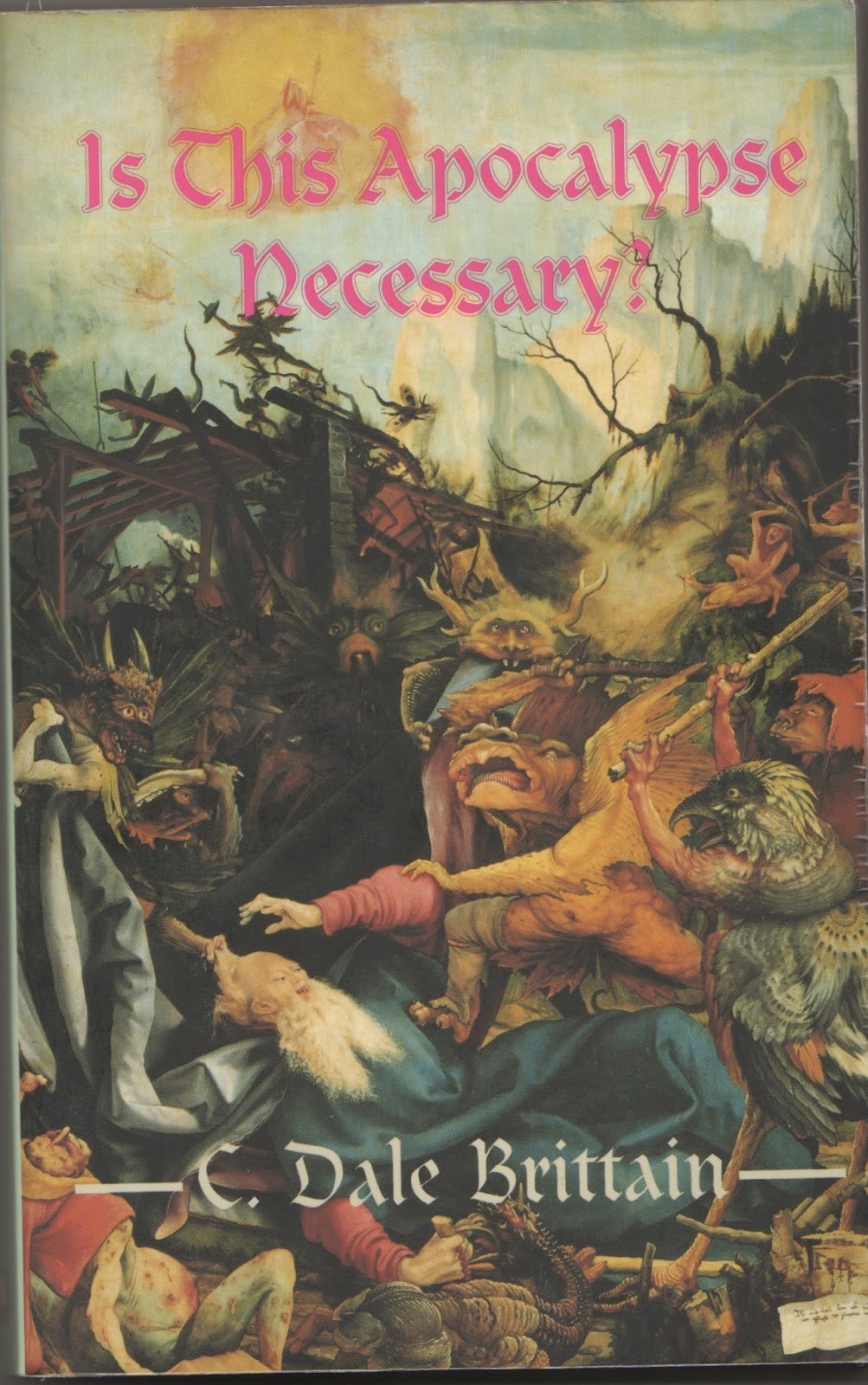
Some of what were described as "temptations" were actually very painful.  I guess the idea was that people would promise the demons anything to make them stop.  Below is a late medieval painting of the "temptation of Saint Anthony."  The demons are having a blast, but Anthony is clearly not.  I used this image for the cover of my fantasy novel, "Is This Apocalypse Necessary?" which (among many other things) includes demons.

Medieval people didn't really make deals with the devil in a nineteenth-century, Faust kind of way, because they realized how little of value the cruel demons could actually offer.  Instead, demons stood by, ready to take souls away to hell, as in the below image of a rich, dying miser whose soul is being snatched while his moneybags are useless below his bed.  (It illustrates the story of Dives and Lazarus.)


© C. Dale Brittain 2017

For more on demons and medieval religion, see my ebook, Positively Medieval:  Life and Society in the Middle Ages, available from Amazon and other e-tailers.


Tuesday, May 27, 2014

Superstition

Medievalists don't like to use the term "superstition" when discussing medieval religion.  For one thing, it is always pejorative:  "My religion is good and true, but yours is nothing but superstition."

For another thing, superstition has a very specific meaning.  It means doing certain acts unrelated to the desired outcome, in order to bring about the desired outcome.  Baseball players are notoriously superstitious, as they will acknowledge readily.  Always eating peanuts before an afternoon game, or turning your lucky socks inside out, or twirling the bat twice and tapping it three times are clearly unrelated to whether you will get a pitch you can hit.  This is why it's superstition.

It's possible to make a pigeon superstitious.  Watch until it does a scratch (or other action) in an unusual way.  Quick drop in a food pellet.  Keep watching.  When it does it again, drop in another food pellet.  A few repeats is all it takes.  Now set up the food pellet drop so it's totally random.  The pigeon will keep on doing the unusual scratch all day—and, sooner or later, the pellet will come!


In medieval Christianity, being a good person and praying kept your soul out of Hell.  The actions were clearly related to the desired outcome, so, by definition, it was not superstition.  (Click here for more on medieval belief in miracles.)

In the image above (a capital on a column in the twelfth-century church of Vézelay), a dying rich man (note the bags of money under the bed) has his soul rising from his chest and being seized by a pair of enthusiastic demons, while his wife looks on in horror.

Now a modern person who didn't believe in demons might say, "Hah, nothing but superstition."  But to medieval people, demons were real.  Many claimed to have seen them.  This particular capital illustrated the story of Dives and Lazarus (it's in the New Testament, look it up—Dives is now usually called "the rich man" in modern translations).  The rich man callously turned the poor man from his door and set his dogs on him, but when he died he went to Hell, where his hoarded money did him no good.

Christianity began as a religion preached to the poor and marginal.  In spite of everything, this message was never forgotten in the Middle Ages, any more than now.  A message like this was aimed at rich people within the church hierarchy (like bishops) as well as at rich laymen.

© C. Dale Brittain 2014