Showing posts with label Is This Apocalypse Necessary?. Show all posts

Tuesday, February 21, 2023

Dante

 Dante Alighieri, usually known by his first name, is considered the greatest Italian poet ever.  The Renaissance claims him, but he was not a Renaissance figure but a medieval one, born in the mid-thirteenth century (generally dated to 1265), and dying in 1321, well before the traditional date of the beginning of the Renaissance, considered to have begun with the Black Death in 1346.  (In practice of course Renaissance Italy is another name for late medieval Italy.)


Dante was a native of Florence, in the region of Tuscany, one of the many city-states that made up medieval Italy.  Although the whole peninsula was (and is) called Italy, Italy became a single country only in the nineteenth century.  In Dante's time Florence was a republic, not a principality, and they were intensely proud of this status, that they felt set them apart from many of the other Italian city-states.  Not surprisingly, however, just as the modern American republic has deep divisions between Democrats and Republicans, the Florentine republic had its own political parties, Guelphs and Ghibbilines, often in open warfare with each other.

But Dante is not known for his politics (though he became embroiled in them) but rather for his literature.  He was especially a proponent of writing in the vernacular, rather than in Latin.  Epics and romances had been written in the vernacular (Old Italian or Old French, etc.) rather than Latin for at least a century and a half before his lifetime, but he argued that the vernacular was suited for elevated literature as well.

His most famous work is the three-part Comedia (usually known in English as the Divine Comedy, although the "divine" was added later).  It was a "comedy" not in the sense of a sit-com, where Uncle Frank comes in, says, "Whatz-upp?" and the laugh track goes Hahaha.  Rather, it was a comedy in the ancient Greek sense of a story that ends well, rather than having the stage littered with dead bodies.

The Comedia is a story of a hero's journey (told in the first person), through hell, purgatory, and heaven.  The character Dante (the poem's hero) is led part of the way by Virgil, an ancient Roman poet.  He meets lost souls in hell, some of whom were the real Dante's enemies, and learns that hell has different circles for sinners, depending on how bad their sin was.

The Inferno, the first third of the long poem, set in hell, is by far the best well known.  Above hell's gate is the inscription, "Abandon all hope ye who enter here," Lasciate ogne speranza, voi ch'intrate.  Dante's circles and vivid imagery of the tortures and regrets of the damned have had a major influence over the next seven centuries, although he was not the first to write about visions of hell.  (When I sent my heroes to hell in Is This Apocalypse Necessary? I based what they saw on pre-Dante visions, though I couldn't resist using Dante's gate inscription.)


After the Inferno come the Purgatorio and Paradiso, generally considered much less interesting, because good people don't excite interest in the same way as sinners.  Because Virgil was a pagan he can't take Dante (the character) all the way through.  When Dante gets to heaven, he is greeted by Beatrice, a woman the real Dante had known slightly and always admired from afar as the epitome of womanhood.

The Comedia was immediately recognized for its genius.  Even today, "correct" Italian is based on the Florentine dialect Dante used, and the language has changed far less since the fourteenth century than has, say, English.  One of Dante's innovations was his rhyme scheme, called terza rima, where the lines rhyme ABA, then BCB, then CDC, and so on.  This is relatively easy to do in Italian but almost impossible to do well in English, without distorting the meaning.  It is said that it is worth learning Italian just to be able to read Dante in the original.

A solid translation into English (preserving the meaning if not the rhyme scheme), with facing Italian, is by Allen Mandelbaum (University of California Press, 1980-84).

© C. Dale Brittain 2023

Sunday, December 3, 2017

Demons

Medieval people worried about demons.  These were malevolent beings, seeking the destruction of souls.  They would inspire people to do things they shouldn't do, tempt them with enticing promises, and harass the virtuous and godly.  They loved to lurk in latrines.

The Bible doesn't have a lot to say about demons, although Jesus is recorded as having cast demons out of people, demons which made them ill or crazy.  But there was plenty there for medieval people to build on.  Demons were usually invisible, but they could take visible shape, such as like a black dog or other animal.  A knight riding to commit a foul deed might abruptly discover that what he thought was a horse was actually a demon, planning to toss him in the nearest river.

But most commonly demons were depicted as vaguely human, usually with horns, sometimes with tails.  One of the things demons loved best was hurting people, so carvings on churches often depict them doing so with great gusto.


The above grinning demon is from the eleventh-century monastery of Tournus.

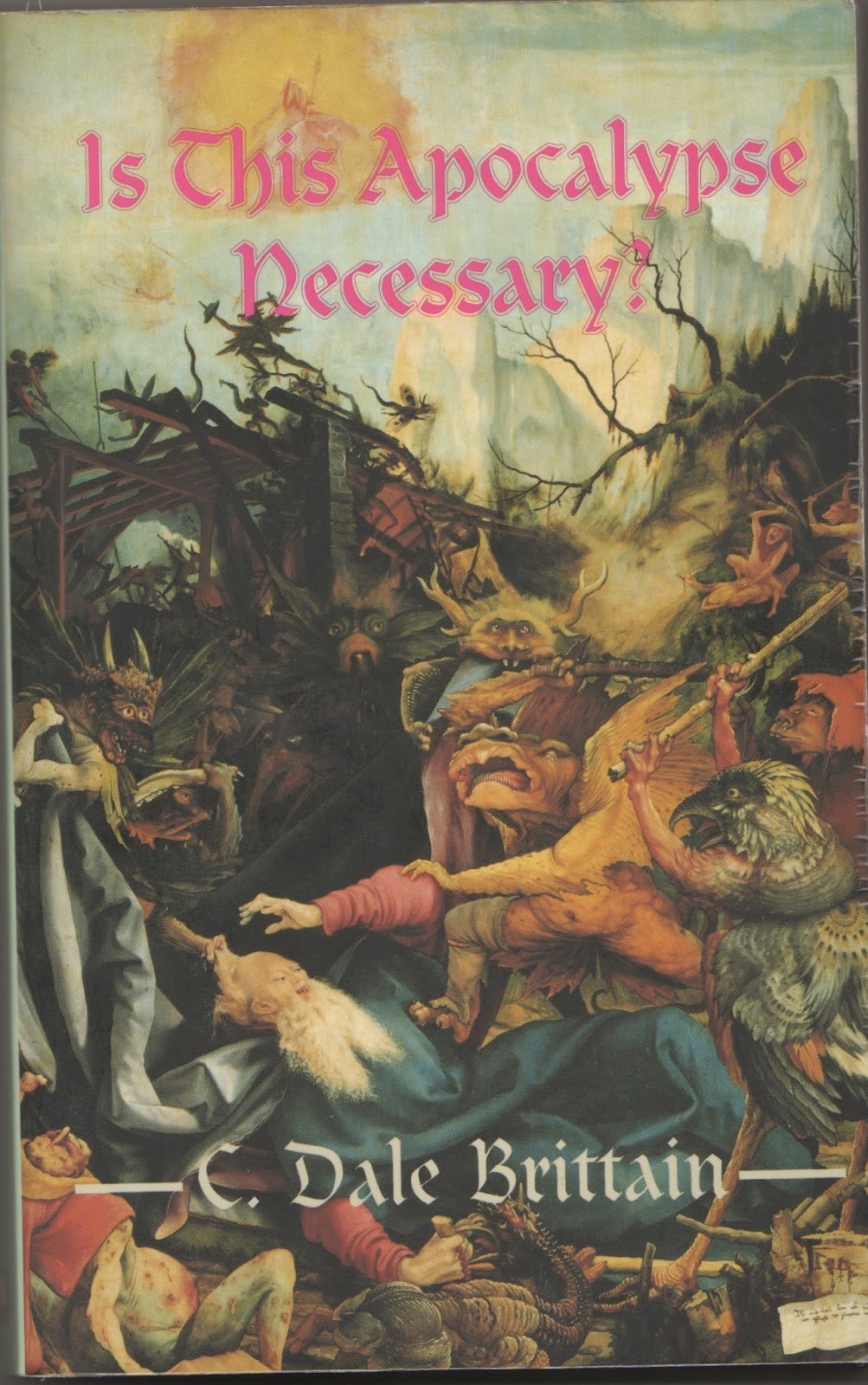
Some of what were described as "temptations" were actually very painful.  I guess the idea was that people would promise the demons anything to make them stop.  Below is a late medieval painting of the "temptation of Saint Anthony."  The demons are having a blast, but Anthony is clearly not.  I used this image for the cover of my fantasy novel, "Is This Apocalypse Necessary?" which (among many other things) includes demons.


Medieval people didn't really make deals with the devil in a nineteenth-century, Faust kind of way, because they realized how little of value the cruel demons could actually offer.  Instead, demons stood by, ready to take souls away to hell, as in the below image of a rich, dying miser whose soul is being snatched while his moneybags are useless below his bed.  (It illustrates the story of Dives and Lazarus.)


© C. Dale Brittain 2017

For more on demons and medieval religion, see my ebook, Positively Medieval:  Life and Society in the Middle Ages, available from Amazon and other e-tailers.


Tuesday, April 26, 2016

Heaven, hell, and purgatory

Everybody sort of knows about Dante, and the account he wrote c. 1300 of a trip through hell, purgatory, and heaven (or, in his Italian, inferno, purgatorio, paradiso).  There's even a "Dante's Inferno" video game.  But Dante was not the first, even if now the best known.  Visions of heaven and hell had been found in Christian writings since the early Middle Ages, often composed as a warning of the punishments to come if one did not stop sinning.

But how about purgatory, you ask?  Well, purgatory was late to the game, really becoming established only in the twelfth century.

Theologically heaven and hell were well established from late antiquity on.  From the time of Adam and Eve on, in medieval theology, everybody went to hell.  Adam and Eve had started sinning (disobeying God) almost as soon as they were created, and everybody after them had had original sin, that is sin from their origin.  No one, no matter how virtuous or well meaning, could be saved.  Hell was Satan's realm.  He thought this was a great arrangement.

That was why, according to Christianity, humans needed salvation, which came in the form of Jesus, who was both fully human (so that he could atone for all of humanity's sins) and fully divine, omnipotent enough to make up for millennia of sinning.  The whole point of salvation was that it was undeserved--humans couldn't deserve it (because they were sinners), but they could accept it, by trying to be the best people they could.

Heaven only started being populated after the crucifixion.  During the three days Jesus was dead (Good Friday to First Easter), he was supposed to have "harrowed" Hell, gone through and scooped up all the virtuous Old Testament figures.  So the first people to arrive in a Christian heaven were Jews.

Except for these Old Testament figures, everyone else was in hell for good.  Purgatory was different, because you didn't have to stay there forever.  There had long been a sense that there ought to be some sort of halfway house, for those not evil enough to deserve eternal punishment yet not pure enough to go straight to heaven and eternal bliss.  By the twelfth century, this took formal shape as purgatory.

One was punished in purgatory to "purge" one's sins (hence the name), but after a certain amount of time you had been punished enough and got to go to heaven.

Exactly when you went to heaven or hell was a bit unclear.  Officially on Judgment Day the dead would rise from their coffins and be judged, sent off to where they deserved to be.  But there was also a sense that you were sent there immediately.  After all, the saints were already in heaven.  Otherwise they couldn't intercede for you with God.  And there were plenty of visions of sinners already roasting in hell.

Hell has always been more interesting than heaven.  It would be lovely to enjoy eternal bliss, but it's boring to read about.  Dante's Inferno gets far more attention than his later two books.


I myself have used pre-Dante medieval visions of Hell in "Is This Apocalypse Necessary?" where my heroes actually voyage through hell (it's a fantasy), but I never try to get them into heaven.  (Click here for more on this book.)

© C. Dale Brittain 2016

For more on medieval religion and other aspects of medieval history, see my ebook Positively Medieval, available on Amazon and other ebook platforms.