Showing posts with label medieval monasticism. Show all posts

Wednesday, April 6, 2022

Saint Benedict

Benedictine monasticism was the dominant form of monasticism in the Middle Ages.  But who was Benedict and why did he get a whole lot of monasteries following his Rule?

As I discussed earlier, monasticism began in the third century in Egypt, as first Saint Anthony, then men following him, then ultimately women began retreating from the ordinary life of the comfortable cities of late antiquity to try to lead a more austere life, in conscious imitation of the lives of the Apostles.  Monasticism reached western Europe at the end of the fourth century when Martin, bishop of Tours, founded the monastery of Marmoutier (the name means "Martin's monastery"--he didn't name it, but others named it in his honor).

Any group of people living together need some sort of agreement on what they are supposed to do and how they are supposed to behave, ideally put in writing.  Monks were no different, so rules for monastic life began to be written almost as soon as there were monasteries.  From the fifth through the eighth centuries there were multiple different rules in use in western Europe, some more detailed than others, some harsher than others, but the one that eventually came to dominate was that written by Saint Benedict (d. 547).

Benedict was Italian, usually called "of Nursia" for his hometown (in the Umbria region).  His name means "well spoken" or "blessed."  He is supposed to have had a twin sister, Scholastica.  (You can figure out her name yourself.)

He wasn't a saint yet when he wrote his famous Rule.  He was abbot of the monastery of Montecassino, in Italy.  (Montecassino was bombed by the Americans during World War II.  They thought, mistakenly, that Nazis and munitions were there.  Let's not talk about it.)  He wanted a Rule for his monks that would be clear, fair, and firm, not too harsh but also not too easy going.  He was inspired in part by the slightly earlier so-called Rule of the Master.

Benedict's Rule laid out the daily round of prayers and work (he assumed his monks would be growing much of their own crops), specified appropriate food and clothing, and told what should happen when a monk strayed or even ran away--he would be treated with both justice and mercy.  A good deal of the Rule covers the responsibilities of the abbot, who was a father to the brothers (monks), and throughout there is a strong emphasis on humility.

Although there was no effort to make this rule official, it gradually became adopted at a number of monasteries over the following centuries.  Every monastery made additions to it to suit their own circumstances, but the original was often read aloud to the monks on a regular basis.  Both Charlemagne and his son, Louis the Pious, urged Frankish monasteries to adopt it.  They were influenced by the abbot Benedict of Aniane, who strongly identified with his namesake from four centuries earlier.

The main monastic orders of the twelfth century, the Cistercians and Cluniacs, were Benedictine, in that they tried to follow Benedict's Rule--and got into disagreements over what Benedict would really have meant.  Some monasteries in the thirteenth century called themselves members of the Benedictine Order, because they followed Benedictine Rule without belonging to a larger organization, but there wasn't really much of an order, nothing like the Cistercian and Cluniac Orders.
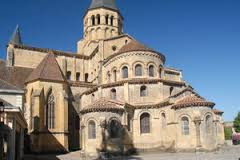
This image is the twelfth-century monastery of Paray-le-Monial, of the Cluniac order.

© C. Dale Brittain 2022

For more on medieval religion, see my new ebook, Positively Medieval:  Life and Society in the Middle Ages.  Also available in paperback.


Saturday, December 5, 2020

Old Folks Homes

 In the modern West it has become common to have what used to be called old folks' homes (not to be confused with the Stephen Foster song about "old folks at home").  These assisted living facilities, senior centers, nursing homes, or the like have become necessary due to a lot of people growing older and less able to care for themselves easily, and in many cases not having anyone able or willing to care for them at home.

With the pandemic these facilities, where a lot of older people with health problems live close together, have tragically become centers of spreading the disease.  But how about the Middle Ages?  Did they have old folks' homes?

No, because most people died before they had become so incapacitated that they would have needed such a facility.  Without modern medicine, diseases or chronic conditions that can now be handled would have carried people off.  With life a lot rougher physically, even for the well-to-do, the average life expectancy was probably more like lasting into ones 50s or 60s, rather than the 70s or 80s we now assume.  (Of course then, as now, these are averages, with some living much longer, some much less.)

Families were expected to take care of the older generation, once the next generation was ready to take over the work, and grandparents provided advice and insights as well as assistance with less strenuous tasks.  The modern Amish still practice something similar, with grandparents moving into a little adjacent house once the next generation is grown, married, and ready to take over the farm.

But there were still institutions in the Middle Ages that served some of the same functions as a retirement home.  The chief was the monastery or nunnery.  Someone (usually aristocratic) who no longer was active and had started to worry about their soul would convert to the religious life, making a suitable gift, taking the habit, and leaving their possessions and family behind.  The new, strict orders of the High Middle Ages, like the Cistercians, required these converts to become novices, following a rigorous schedule to learn all about the monastic life.  Other monasteries provided a (reasonably) comfortable home where older people could pray and hope to make it into heaven.

These were group facilities, but rather than just being homes for the elderly, they were communities that included all ages down to teenagers, and at a lot of traditional monasteries, down to childhood.

 Alternately, one could go into a hospital.  Medieval hospitals became common from the thirteenth century on, founded as an act of charity by the wealthy and powerful.  The hospital of Beaune, pictured above, was founded by the most powerful lords of Burgundy.

These weren't really retirement homes, however.  They were places for the sick, the indigent, and the dying (more like a hospice).  The nuns would however try to heal the sick.  Chicken soup and saint dust are great cure-alls.

© C. Dale Brittain 2020

For more on medieval social history, see my ebook, Positively Medieval:  Life and Society in the Middle Ages.  Also available in paperback!


Sunday, July 26, 2020

Little lost monasteries

As I have discussed earlier, there were a large number of monasteries in the Middle Ages, houses where men (or women, though not both together) lived like a family, sharing their possessions, following a simple life cut off from the outside world (like in pandemic quarantine!), devoting all their attention to prayer and contemplation (not to Netflix binging).

Historians today tend to focus on the famous ones, like Cluny, whose church was the biggest in Europe, or Cîteaux, head of an order of austere "white monks" (so-called because unlike most monks they did not dye black the wool for their habits), or Fontevraud, where English kings and queens were buried.

But there were a whole lot of other monasteries, smaller for the most part, "lost" to historians today because most of their documents were lost, by the French Revolution if not indeed during one of the upheavals (or fires) of the preceding centuries.  Even their buildings have in many cases fallen into ruin, been deliberately destroyed, or sold.  During the Great Depression, some churches sold their buildings to American collectors.  The "Cloisters" in New York City, part of the Metropolitan Museum of Art, came from St.-Michel of Cuxa, in the foothills of the Pyrenees.

Less well known are the remains of the monastery of St.-Laurent, in the Puisaye region of Burgundy.  But the large Romanesque portal of the church is now in the Museum of Fine Arts in Philadelphia, where probably most people who see and admire the portal have never heard of the monastery.  The portal is shown below.


Portail de l'abbaye, musée des beaux-arts de Philadelphie (États-Unis). 

The majority of the monasteries about which little is known today seem to have had their origins in the Merovingian period, from the late sixth through the early eighth centuries.  Multiple small houses were founded then, many in cities.  Wealthy laypeople founded such houses and endowed them with property, and saints retreated to hermitages that became monasteries as the saints gained followers.  The monastery of St.-Laurent may have been one of them, if it can be identified with "Saint Wulfin's monastery" mentioned in the sixth century.

 But St.-Laurent (or St.-Wulfin) then disappears from the records, as do most other Merovingian-era foundations.  The following centuries were difficult ones for religious houses, between rapacious laymen appropriating monasteries as their own—the Carolingians, the family of Charlemagne, were noted for such appropriations, and many great dukes and counts followed suit—plus attacks by Saracens, Vikings, and Magyars.  Not until the eleventh century did these old little monasteries start to be reestablished.  New, rural monasteries, such as Cluny and Vézelay, were founded in the late ninth and tenth centuries, and during the eleventh and early twelfth centuries there was a concerted effort to reestablish the ruined Merovingian-era houses.

Most became houses of canons regular.  Such canons lived essentially like monks (sharing possessions, living simply in chastity and obedience) but they did interact with the outside world, saying mass for laypeople, baptizing and burying.  Because they were paid for such services, they could subsist on less property than could cloistered monks.  Old ruined monasteries in cities mostly became houses of canons regular.

So did St.-Laurent.  It was located on one of the major pilgrimage routes to Compostella, and it gained a good deal of attention and pious gifts, which was why it built so large a church, to serve both the canons and the pilgrims.  Never affiliated with any of the better-known monastic orders, it still commanded respect and admiration in its time, and it supervised the priests (and received the revenues) of a number of parish churches.  But like many other smaller medieval monasteries, it has few or no surviving records and is now essentially forgotten, except perhaps by the local historian of the village where the monastery once was established (St.-Laurent-l'Abbaye).

© C. Dale Brittain 2020

For more on monasticism and other aspects of medieval history, see my ebook Positively Medieval, available on Amazon and other ebook platforms.


Monday, June 15, 2020

Robert of Arbrissel

Although Cluny and Cîteaux, as I have discussed earlier, are now the best known French monasteries of the eleventh and twelfth centuries, there were plenty of other houses, not associated with either of these great monasteries, where the monks tried to follow a pure life, and where laypeople came seeking prayers for their relatives and themselves.

One of the most significant of these was Fontevraud, founded in the early twelfth century in the west of France, on the border between Anjou and Poitou.  It was patronized by great kings, including Henry II of England and his wife, Eleanor of Aquitaine, who had already been queen of France before marrying Henry.


The above is Eleanor's tomb at Fontevraud.  (It was added well after her death.)

But Fontevraud had a distinctly non-royal origin.  It was founded by a man named Robert of Arbrissel (c. 1045-1116), so-called because he came from the village of Arbrissel, in Brittany.  He joined the church as a young man and became a priest.

He was very interested, as were many other well-educated men in the eleventh century, in trying to find a life that matched that of the early apostles.  In his early 50s he retreated to the forest of Craon, near his home village, to become a hermit.  There were actually quite a few hermits there already, men living alone, devoting their days to prayer and contemplation, living from offerings of people who came to seek their wisdom and from small vegetable gardens.

It would be difficult being a hermit.  On the one hand one didn't want to starve, and thus pilgrims bringing small offerings were good.  On the other hand, how can a hermit focus on spiritual matters if people keep showing up and asking all sorts of things?

Robert, because of his learning and wisdom, soon attracted a following, and disciples began assembling around him.  In essence, his hermitage became a monastery.  And with his disciples around him seeking his spiritual insights, Robert seems to have decided within a year that his real vocation was in preaching, spreading God's word.  The pope was visiting France, and he gave Robert an official "license to preach."  For the next twenty years, until his death, Robert wandered around, preaching and gathering followers.

He appealed especially to women.  He would come into town, preaching God's word, and when he left, a number of women would go with him.  Now without modern forms of entertainment and communication, a wandering preacher was much more exciting at the beginning of the twelfth century than it is now.  And one can certainly see that women would have been intrigued by the possibility of leaving a dreary life behind.  But walking cross country, living on hand-outs, and sleeping in fields was not going to be "fun" for long.  The women kept on, at least some of them, convinced they were drawing closer to God.

The bishops were distraught.  What was this old guy doing, wandering around with a lot of women?  One bishop accused him of looking like the village idiot, going barefoot and dressed in shabby clothes.  He even accused him of practicing some strange exercise in self-control, in which a man would deliberately sleep next to women without any sexual activity, to test their ability to resist temptation:  but, he said, this never worked, "as the cries of babies show us, if you get my drift." He told Robert that he had to found a nunnery and put all these women in it.

Robert rather reluctantly established the monastery of Fontevraud in 1101 for the women.  But it was not just for women.  Under the authority of one woman, an abbess, there was a house for women, a house for men, and a leprosy, a house for lepers.  Fontevraud immediately became known for its holiness of life, which is why it gained so much attention in the following generations, including from kings and queens.  The bishop expected Robert would stay there, but he kept right on wandering and preaching.  He would promise to stay put "this time" and head right out again as soon as the bishop's back was turned.  His followers considered him a saint after his death, for his humility and holy wisdom, but he has never officially become a saint, probably because of his failure to follow the rules.

The monastery is still there, all the different components surrounded by a long wall, though it is now a museum, without monks or nuns or lepers.  The former leper house is now a luxury hotel.

Two "lives" of Robert were written shortly after his death by men who had known him, translated into English by Bruce L. Venarde, as Robert of Arbrissel:  A Medieval Religious Life (Catholic University Press, 2003).


© C. Dale Brittain 2020

For more on monasticism and other aspects of medieval history, see my ebook, Positively Medieval:  Life and Society in the Middle Ages, available on Amazon and other e-tailers.  Also available in paperback.


Friday, June 8, 2018

Competition Between Churches

It's easy to think of medieval priests and monks and nuns as other-worldly, focused on spiritual issues, above the normal strife of life.  And indeed this was their own ideal.  In practice, different churches were often in fierce competition with each other, "survival of the fittest," "red in tooth and claw."  (Not quite that bad, but...)

For starters, bishops and the monasteries/nunneries in their regions always differed on who was the most holy.  The bishop claimed, with a certain plausibility, to be "apostolic," to be the successor of a first-bishop in the region, who had been sent out by a bishop of Late Antiquity who had been ordained by a bishop who had been ordained by a bishop who had (etc.) back to Saint Peter, leader of the apostles.

The monks couldn't claim a similar apostolic heritage (since monasticism only began a few centuries AD), but they certainly could assert that by living in common, sharing their possessions, they were following the life of the earliest Christians, as described in the Bible, in Acts of the Apostles.  Hah!  Apostolic after all!  This meant they felt they really shouldn't be judged by a bishop who lived like an aristocrat, with his own house, his own servants, his own meat for dinner rather than bread and stewed leeks (plus maybe some nice lentils).

The monastery of Cluny, for example, spent much of the eleventh and twelfth centuries claiming exemption from their local bishop, the bishop of Mâcon.  The bishop was not convinced, even when the monks got the pope on their side.

Even if a bishop and monastery were not fighting about oversight, they often disagreed over which one the saints of the region loved best.  At the city of Auxerre, for example, all the bishops, starting with the fifth-century Bishop Germanus, were buried at the monastery soon named St.-Germain for him.  So obviously the early sainted bishops must love the monastery best.  The bishops at the cathedral differed.  (The image below is the cathedral, though the current structure  dates to the thirteenth century, not the fifth.)


At Tours, there was comparable competition between three churches, the cathedral, where Saint Martin had been a bishop at the end of the fourth century; the monastery (Marmoutier) he founded outside of town; and the basilica where he was buried.

Within a particular region, different monasteries would compete for which one had precedence.  In Ghent in eleventh-century Flanders, on what was then the border between the Holy Roman Empire and the French kingdom, two monasteries both claimed to have been the original foundation of Saint Amand, who first brought Christianity to the region centuries earlier.  Saint Peter's, up on the hill above town, rewrote the vita (a saint's biography) of Amand, explaining how he came wandering into pagan Ghent and decided that up on a hilltop was the perfect place for a monastery.

Amand had named his house, the monks of Saint Peter's continued confidently, for the leader of the Apostles.  Obviously, they continued, the monastery down by the river in town, Saint Bavo's, was named for some later, clearly inferior saint.  Now archaeology indicates that Saint Bavo's was in fact the first monastery in town, and the monks there had records to prove it! (or so they said).  For a generation the two Ghent monasteries had the same abbot when they were both recovering from Viking raids, and this was an excellent chance for the monks of both to paw through the other's archives and steal or rewrite what they found.

© C. Dale Brittain 2018

For more on the medieval church, see my ebook, Positively Medieval:  Life and Society in the Middle Ages.


Wednesday, April 18, 2018

Cluny

I've posted before about medieval monasticism.  Today I want to discuss one particular monastery and its associated monastic order, that of Cluny.

Cluny was founded in Burgundy in 910 by the powerful duke of Aquitaine, who specifically said that neither he nor any other layman would meddle in the monastery’s affairs.  This was a big concession at a time, in the aftermath of the Vikings’ raids, when many French monasteries were abandoned, and a lot of dukes and counts acted as titular abbots of monasteries, taking monastic revenues for their own.

But Cluny quickly became well known as a holy house, where the monks lived separate from the sordid affairs of the world, even though a village quickly grew up adjacent to the monastery, and both regional landowners and aristocrats from further away came to the monastery to make generous gifts.  Donors admired the monks’ adherence to the Benedictine Rule, emphasizing common property, obedience, learning, and prayer.

In the politically unstable tenth century, Cluny avoided getting drawn into factional wars, due in part to the abilities of a series of long-lived and widely admired abbots (though one of these abbots had more adventures than he anticipated when he was briefly captured by bandits during a trip).

Laymen who controlled other, older monasteries that had either been abandoned or which no longer supported a rigorous religious life gave these houses to Cluny to reform--that is, to bring back to observance of the monastic rule.  The abbot of Cluny would become the abbot of these houses as well.  In some cases, after a few years (or at any rate when the abbot of Cluny died) the house would elect its own abbot, though retaining close ties to Cluny.  In other cases the house would now be headed by a prior, who would answer to Cluny's abbot.  These houses collectively were called the Cluniac Order, although there was no real orderly organization.  (Ordo just meant way of life.)

Cluny claimed (with only partial success) to be exempt from the oversight of its bishop, saying, for example, that the monks could choose any bishop they wanted for consecrating a new abbot.  The monks felt that they, living a life without luxury or even personal property (or even meat) were holier than bishops who might live like princes.  The bishops were some of the few who did not see the monks of Cluny as holy.

Most of Cluny's monks were so-called oblates, boys offered (by their parents) to the monastery.  (In Latin, the past participle of offero is oblatum.  You learn something every day.)  However, there were plenty of monks who had taken the monastic habit in their mature years, including one eleventh-century duke of Burgundy.  Cluny had a daughter house, Marcigny, specifically for women who became nuns when their husbands became monks.

In the twelfth century, some of the newer, more austere monasteries faulted Cluny for letting mature converts become full monks immediately, without spending a year in rigorous training as a novice.  Cluny's abbot said they did this out of love and mercy, as these old guys would probably be dead soon anyway (he phrased it more diplomatically).

Generous gifts paid for first a second, larger church to be built to replace the small one of the early tenth century, and then in the late eleventh century Cluny III as it is known, a triumph of Romanesque architecture.  The new abbey church, finished around the year 1100, was the biggest church in Christendom (until the sixteenth century, when Saint Peter's in Rome surpassed it) and was richly decorated.


The image should give you some sense of the size of this church (now a museum).  This is one of the transepts (crossings).  Unfortunately, this is about all that is left.  During the French Revolution, the church (as with all French churches) became officially the property of the state.  Napoleon dismantled it, using the nicely quarried limestone to build the stud stables for his cavalry.  (There is still an equestrian center in the village of Cluny.)  Napoleon has a lot to answer for.

© C. Dale Brittain 2018

For more on medieval monasticism and so much more, see my ebook, Positively Medieval:  Life and Society in the Middle Ages, available from Amazon and other on-line bookstores.


Saturday, May 21, 2016

Hermits

We think of a hermit as someone who withdraws from society, who perhaps has some sort of psychological problem (afraid of crowds, bad social skills).  Or perhaps we think of the cartoon wise man (guru) living on top of a mountain.  In the Middle Ages, hermits withdrew from society for religious reasons, to devote their lives to prayer and contemplation.

As I discussed in an earlier post on monasteries, monks and hermits began in Egypt in the third century with Saint Anthony—if you're named Tony or Antonia, you're (ultimately) named for him.  Hermits came first, men (rarely women) who went out into the desert to live an extremely simple life of prayer.  People did come to seek their wisdom, which was usually along the lines of giving up sin and purifying oneself for God.

Because it is easier to keep to a life of radical prayer and asceticism if one has helpers to nudge you back in line if you start to drift, many hermits started gathering together in groups, under a master or abbot.  Both forms of life, the solitary hermit version and the monks in groups version (eremetism and cenobitism if you're keeping score at home) continued during the Middle Ages.

It was hard to be a hermit (which of course was the idea).  Even beyond what must have been the constant temptation to think, "What am I doing?  Why don't I go back to town and see my friends for a change?" there was the basic difficulty of getting enough to eat.  Hermits settled by preference in wild, solitary places, which meant they would have difficulty growing crops.  There were nuts and berries, but these only go so far.  Essentially hermits were dependent on people coming by and making gifts.

In the Egyptian desert of late antiquity, the hermits became something of a tourist attraction, and people would come from as far away as Jerusalem to visit them.  Some hermits made simple objects like sandals or prayer mats from palm fronds and sold them to the tourists.  But chatting with tourists sort of undercuts the whole solitary-prayer thing.  Some hermits wouldn't come out of their cells and just had to hope the tourists would drop off some food before leaving in frustration.

In the early Middle Ages, when the economy was very tight, it was hard for anyone to make a living, much less a hermit.  But when the economy started booming in the eleventh and twelfth centuries, leaving the world and its comforts for radical simplicity and solitude became not just possible but appealing.  Most new twelfth-century monasteries had their origins in hermitages, where an original solitary had gathered a small group of followers.

This was the problem of being a holy hermit.  "He lives all by himself, he is so holy, he understands the ways of God, being so solitary," people would say.  "Let's make him lavish gifts and go live with him."

Because I try to include at least some real medieval history in my fantasies, I have a hermit—with apprentices—in The Wood Nymph and the Cranky Saint.  They live at the shrine of a long-dead, sainted hermit, the Cranky Saint himself.


The book is available as an ebook from Amazon and other ebook stores, as well as an audio book.

© C. Dale Brittain 2016

For more on the medieval church, see my ebook, Positively Medieval:  Life and Society in the Middle Ages.


Monday, February 29, 2016

Medieval poverty

By modern standards, everyone was dirt poor in the Middle Ages.  Even the wealthiest lacked the "things" that everyone but the truly homeless now take for granted:  electricity, indoor plumbing, central heating and air conditioning, telephones, washing machines, automobiles.  There were no TVs or movies, no radios or CD players, no subways or buses, no supermarkets.

Nonetheless, there were always gradations of wealth, with some people considered very rich.  Their wealth was based more on the power to command than on their bank accounts, but those considered rich did have much nicer clothing (and more outfits), better houses and furniture, and on average better food than those considered poor.  Everyone, as is the case now, would have liked to be rich.

During the early Middle Ages especially, wealth was rare.  During this time holiness and wealth were often equated.  God was referred to as the King of Kings, and He was worshipped in churches that might, by later standards, be cramped and dark, but on the inside there was plenty of precious metal on the vessels and silken hangings on the walls.  Bishops lived like princes, which was considered entirely appropriate.

It was clearly understood by everyone that helping the poor was a good Christian duty.  There were however so many poor people that those with wealth essentially gave up.  When most of the population was trying to scratch out a subsistence living, it was hard to know where to start.

But with the economic upturn of the twelfth century, it actually became possible to climb out of poverty.  Merchants could make enough money to rival the nobility in their possessions and lifestyle.  Some peasants became wealthy enough to hire other peasants to do their farm chores for them.  Young men tired of trying to farm unsuitable ground could move to the rapidly growing cities to "make their fortunes" (or at least get a little ahead).

At this time, holiness became defined not with wealth but with poverty, in particular voluntary poverty. Monks had always lived more simply than bishops, but now the new monastic orders sought to give up all personal possessions and live austere lives:  vegetarian diets, undecorated churches, hard manual labor.  The King of Kings became instead the itinerant preacher of the New Testament, begging for a living.  The new monastic orders liked to point out that they were much humbler and poorer than bishops or older monasteries, and hence holier, even though (as they recognized themselves) it was hard to avoid being proud of how humble they were.

Older monastic orders, although not adopting poverty quite so radically, still sought to assure that their monks had only collective property, not individual property.  All of them continued gifts to the poor.  For example, any food left after the monks had eaten was distributed to beggars.  Some monasteries had a group of official poor people living outside the gates, to whom such alms were given and whose feet would be washed on Maundy Thursday.

Today no one voluntarily chooses to be poor (though you might think so, based on the punitive nature of some supposedly anti-poverty programs).  But voluntary poverty was greatly admired in the High Middle Ages (see more here).  The most extreme example was the thirteenth-century Saint Francis (whose name the current pope took), who urged his followers to live by wandering and begging, not even keeping an apple overnight to eat the next day--eat it if you're hungry, but otherwise give it away.  The Franciscan order, unable to maintain this rigor after his death, ended up living essentially like austere monks.

Poverty as a real threat, not just something to be avoided--or chosen--came back in the fourteenth century.  Europe was becoming over-populated, at the same time as the climate was worsening.  Famines broke out on a scale not seen for several centuries, and desperate bands of hungry people might roam the countryside, looking for food.

It was at this time that the distinction between "deserving" and "undeserving" poor was first made.  Now donors wanted to know if the poor they were asked to help really deserved it, were honest, hard-working people who had suffered disasters, or if they were shiftless bums (and probably drunks) who got what was coming to them.  This is a distinction the modern world still makes.

The fourteenth century was also the time of the Black Death and the outbreak of the Hundred Years War.  It was also the beginning of the Renaissance.  A bad time all around.

© C. Dale Brittain 2016

For more on medieval poverty  and other aspects of life in the Middle Ages, see the ebook, Positively Medieval, available from Amazon.


Thursday, November 13, 2014

Monasticism and secular society

In an earlier post, I defined medieval monasticism.  Here I shall give more detail on the relations between the monks and the powerful leaders of society.

First of all, it is crucial to keep in mind that "the church" and "secular society" were not separate, discrete units.  They constantly interacted.  Indeed, church leaders, the bishops and abbots, were frequently the brothers and cousins of secular leaders.  Those electing church leaders just took it for granted that those coming out of the leading families were more suited to command.

This did not however mean that church leaders were just the pawns of the powerful.  Instead, for much of the Middle Ages, it worked the other way.  A lord who misbehaved was likely to be subject to an extremely serious talk from an extremely close relative in the church.


Probably the majority of monks were also from the upper levels of society.  Monasteries normally expected an entry gift, to pay for the upkeep (for life) of the new monk, and peasant families would not have felt they could spare any children.  This did not mean of course that noble families were disposing of "extra" children, for giving a son or daughter to the church was always treated as a sacrifice, giving one's most precious possession to God.

These child offerings (called "oblates") were the most common sort of medieval monk or nun, brought up in the cloister, rarely if ever seeing relatives again.  But some twelfth-century monasteries did not take child oblates, requiring instead adults who made the decision themselves.

Young knights frequently joined such houses, filled with religious enthusiasm, as excited to be giving up everything for God as they might, in other circumstances, have been excited to go on Crusade or to a tournament or to war.  They would have to know Latin already to join, meaning a good education was required.  Young adult peasants might experience the same enthusiasm, but without an education they could only become sort of halfway monks, conversi as they were called, who ended up doing a lot of the agricultural work.

Few men "converted" to the religious life in their middle years, though women might if widowed.  (One spouse really could not enter the cloister while the other stayed in the world.)  In old age, both men and women often "took the habit" as they felt themselves dying, as a last attempt to atone for their sins.  Complications arose if they recovered from what they had thought was a fatal illness and decided they had changed their minds--for you could not change your mind about an oath to God.

As well as becoming monks and nuns themselves, nobles were the biggest donors to the monasteries, hoping to gain the favor of a monastery's saints through their generosity.  They might even found a brand new monastery.  The image above is of St.-Etienne of Caen, the monastery William the Conqueror, duke of Normandy, founded in the wake of his 1066 conquest of England, to try to make amends for the deaths of so many people.

© C. Dale Brittain 2014

Thursday, July 31, 2014

Medieval Monasteries

What's monasticism?  The institution of monasteries.  What's a monastery?  It's a place where monks live.  So what's a monk?

Literally a monk, "monachus" in medieval Latin, was someone who lived by himself, solitary (from the root mono-, one).  And the first monks were indeed solitary men, hermits we would now call them, starting in the third century in Egypt.  At the time there were a number of comfortably settled Christian communities in Egypt, and Anthony, monasticism's founder, thought that it had become too easy just to be a "Christian on Sunday" and headed out into the desert in search of a simpler, purer, life.

The problem with hermits is that someone can just make up his own rules, and it can be hard for others to tell the God-inspired recluse from the crazed vagrant.  Quickly hermits started gathering in groups, where they could help and correct each other, under the authority of an elected leader, the abbot (from abba, meaning Father).  These were the first real monasteries.

The New Testament is full of radical calls to give up one's possessions and one's comfortable life.  For the last two thousand years, there have been periodic waves of enthusiasm for doing so.  In the Middle Ages, these most commonly led to new, stricter versions of monasticism.


At any self-respecting monastery, the monks gave up all the comforts and pleasures of ordinary life.  They lived in common, sharing their possessions rather than owning anything of their own--as the Bible says the original Apostles did.  They slept in a dormitory with skimpy bedding.  They all wore the same standard-issue robes and had their beards and heads shaved, leaving just a circle of short hair around a shaved crown.

They ate a vegetarian diet, with no meat, though they did have cheese and eggs and, occasionally, fish. They spent their days in prayer, in singing the psalms, and in reading and copying books, both religious books and books of history, including works of classical antiquity.  Indeed, we would know virtually nothing about classical (pagan) Rome if it were not for archaeology and for medieval monks copying their writings from fragile papyrus onto more durable parchment.

Although early monks were all men, women too soon wanted to become monks (as discussed more here).  Nunneries, monasteries for women (now often called convents), soon became established, although for most of the Middle Ages there were far more monks than nuns.  Men thought that nuns should have an easier regimen than monks, more blankets on the bed, a richer diet, less hopping up in the middle of the night for the liturgy.  The nuns disagreed.  If men could be strict, they wanted to be just as strict.

Both men and women gave up marriage, sex, and family in "converting" (as it was called) to the monastic life.  Once you'd made your vows, you couldn't pop home for a vacation or change your mind.  A runaway monk or nun, with a shaved head, was pretty obvious.

Parents might offer a child to a monastery or nunnery, knowing they might never see that child again.  One sometimes sees mistaken suggestions that parents disposed of excess children in this way, but in the relatively underpopulated Middle Ages, when all children were cherished, this was quite a wrench, done both as a sacrifice on the parents' part (a large gift was also expected to accompany the child) and to give the child a good shot at salvation.

People could and did convert to the monastic life as adults, often in widowhood, but sometimes in enthusiastic young adulthood.  If someone was married, the spouse also had to "leave the world" for the monastic life.

The wealthy who did not want to become monks and nuns themselves often made gifts.  "The monks are so holy, they lead such a simple life of poverty so far from civilization, I think I'll go drop in on them and make them rich presents."  The wealthy never understood why monks were not as enthusiastic about this as they were.

Click here for more on medieval Christianity and here for more on medieval monasticism.

© C. Dale Brittain 2014

For more on the medieval church, see also my ebook, Positively Medieval:  Life and Society in the Middle Ages.