Showing posts with label origins of fantasy. Show all posts

Tuesday, August 18, 2026

Varieties of modern fantasy

 Fantasy has become a well developed genre, with lots of sub-genres, from romantic ("romantasy") to grim-and-dark to "cozy" to humorous.  Today I want to talk about several recent excellent fantasy books as examples of the variety the field has embraced.

Okay, at the simplest, fantasy is a story with magic, usually (not always) set in an imagined past, often vaguely medieval.  JRR Tolkien essentially invented the modern genre with The Lord of the Rings, and in the 1950s critics didn't know what to make of it, although they liked it a lot.  "Super science fiction."  "Fairy tales for grownups."

Tolkien-style fantasy has dominated for 75 years. It has a fairly well developed world in which the story takes place, generally with wizards, magical creatures like hobbits or elves or dragons, often a map.  The material culture is pre-modern, swords instead of guns, horses instead of cars, hand-made instead of factory-made goods, wood fires instead of electric and gas.  George RR Martin has this kind of setting for his on-going series beginning with A Game of Thrones.  My main fantasy series, "The Royal Wizard of Yurt," falls more or less into this category (though I highly doubt anyone would compare Yurt to Martin's Westeros.)

One can vary this with fairy-tale fantasy, sort of the same but vaguer on setting, often including such New World items as chocolate and potatoes in a semi-European setting (even Tolkien included potatoes and tobacco), generally more lighthearted (certainly more so than Martin), and frequently involving princesses.  Some authors retell classic tales like "Beauty and the Beast" or "Snow White" this way.

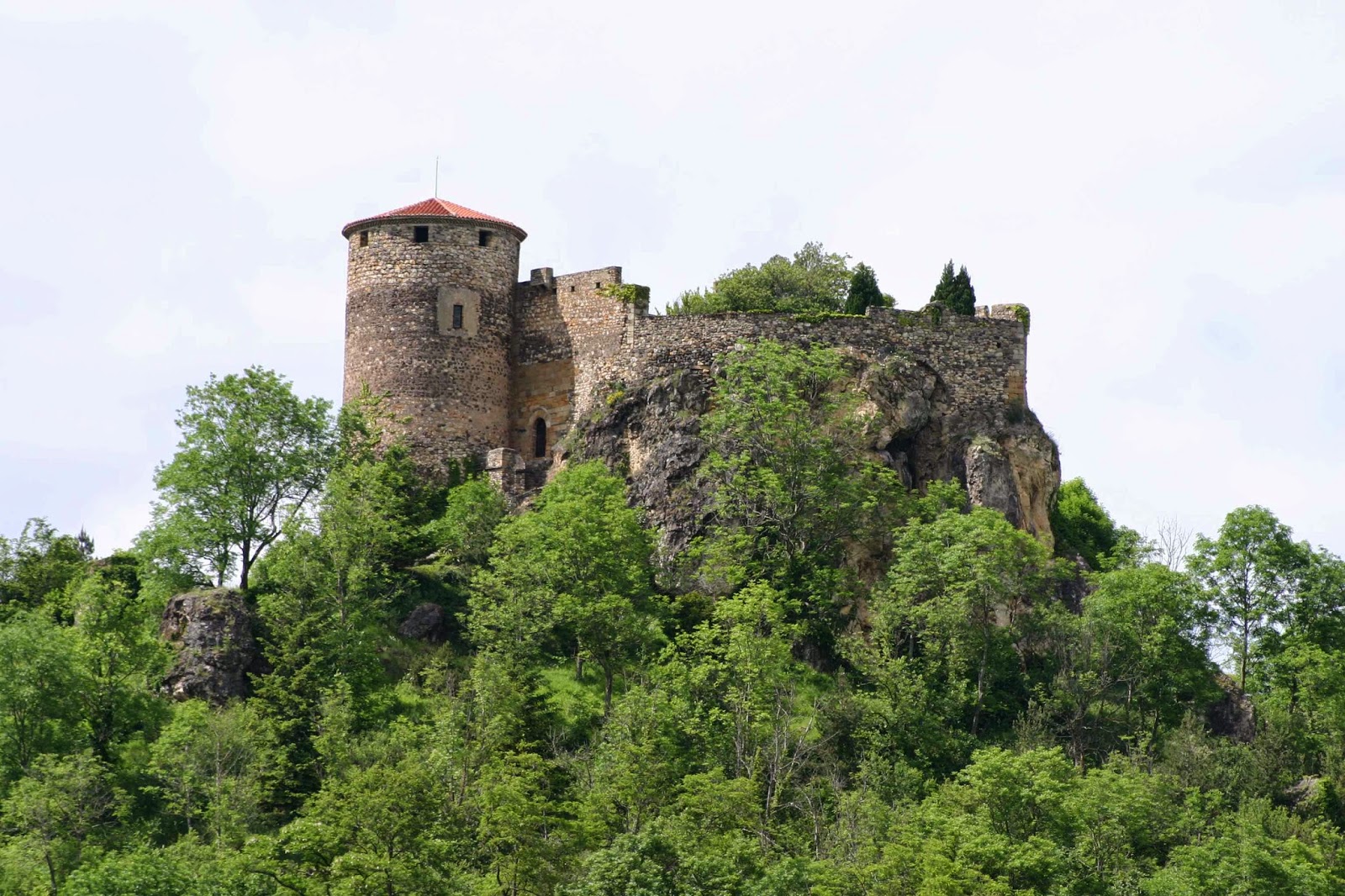
Alternately one can have a medieval setting that is pretty close to the real Middle Ages, although with magic. My husband and I did this with our Count Scar.


One can also set fantasy in something like the modern world.  The book The Everlasting, by Alix Harrow, starts off in something sort of like modern England but then ranges back over the centuries to the Bronze Age or before, with efforts to remake history in pursuit of justice.  It's been getting a lot of attention for its unexpected plot twists and strong characters.

This book just came out last year, as did Snake Eater by T. Kingfisher.  This one is set in something close to the American Southwest, and it is very evocative of the creatures and myths of the desert and the native Americans.  Its magic isn't time-travel but the idea of desert gods attached to native creatures (a roadrunner is crucial, definitely not the cartoon version).  Again, excellent characters.

A third recent book I've very much enjoyed (though it's nothing like my own fantasy) is The House in the Cerulean Sea by TJ Klune. This one is a few years older. It's set in something like modern Britain, except that a lot of children are born as magical creatures, and there's a highly questionable bureaucracy that is supposed to supervise them. Humor, very realistic children, and a touch of gay romance, lots to enjoy.

You will notice that fantasy is very rarely a quest to overcome the Dark Lord these days. Ever since Diana Wynne Jones published Dark Lord of Derkholme, a hilarious adventure where people from our world pay to take quests through the "portal" to a fantastic land and "slay the dark lord," we haven't seen it much.  But there are lots and lots of alternate plot lines. Fantasy, when done right, raises real human concerns in a setting like and unlike ours. And I haven't even talked about sex-with-magical-creatures.

© C. Dale Brittain 2026  

Sunday, July 19, 2015

Fantasy and Science Fiction

Modern fantasy and science fiction are now considered more-or-less the same genre.  Although they are shelved together in bookstores, they are quite different in origin and orientation.

Fantasy, as I discussed earlier, is the world's oldest literature, larger-than-life people racing across the landscape, having adventures that include a major element of marvel and the supernatural, adventures that the authors use to make moral points and to critique their society.  Think of Gilgamesh (a Babylonian epic) or, for that matter, the Old Testament.  Modern fantasy is a re-imagining of the twelfth-century epics and romances--but in the twelfth century these stories were not considered "fantasy" but simply literature.

Fantasy became a major genre in the twentieth century.  But when J. R. R. Tolkien's Lord of the Rings essentially started it in the 1950s, no one knew what to call it.  (There were some earlier examples, but not enough for a genre.)  The terms "fairy tales for grownups" and "super science fiction" were used in reviews of Lord of the Rings.  Fairly quickly people settled on "fantasy" (a term popularized by Ballantine Books in the 1970s), although the word "fantasy" still is used widely to use something completely imaginary, or something like a guy being surrounded by a bevy of lovely and willing wenches.


Today "fantasy" novels are expected to have dragons, wizards, and a more-or-less medieval setting.  This is true of my own novels, Tolkien's, George Martin's, and thousands more.  Some authors start with real medieval history and add magic, which can be considered historical fantasy.  Some authors try to defy the stereotype, putting magic (and sometimes elves or vampires) into the modern world, which can be either considered urban fantasy or magic realism (depending on the number of elves and vampires).  You know it's a popular genre when it spawns a lot of sub-genres.

Science fiction has much more recent roots, yet was established as a genre in popular literature before fantasy.  It began as a genre in the early twentieth century in the wake of the industrial revolution, as people began speculating on where our technology could take us--and whether that would be good.  While fantasy is set in an imaginary past, science fiction is set in an imaginary future.  Most commonly it has spaceships.

Although there has always been an element of "Aiyee! Here comes the tentacled space monster!" in science fiction, true fans prefer what they call "hard" science fiction, which is based on real science and which tries to have a rational explanation if something seems to defy what we would consider the laws of the universe.  Along with the adventures, there will be a lot of "world-building," speculating on what life on other planets or for alien species would be like, and how humans would react.

In spite of being set in an imaginary past or imaginary future, both fantasy and science fiction are really commentaries on our our society--as fantasy has been since the beginning.  This is clearly evident in science fiction.  When modern American society is booming, novels show an optimistic future, with poverty and crime overcome and lots of flying cars and pet robots.  When the American economy stagnates, novels give us dystopian futures, full of evil repressive overlords.  You can learn a lot about the 1950s and 1960s by reading the science fiction written then.

© C. Dale Brittain 2015

Wednesday, February 25, 2015

The World's Oldest Literature

Fantasy is now considered a sub genre of science fiction, sometimes dismissed as juvenile or "not really" literature.  People like Margaret Atwood who write what sure looks like speculative fiction deny vehemently that they are doing so.

But there is nothing to be embarrassed about in enjoying fantasy (or, for that matter, science fiction).  It is after all the world's oldest literature.

Think about what makes fantasy be fantasy (aside from the wizards and dragons).  It's about somewhat larger than life characters, having exciting adventures in a world imbued with the marvelous and supernatural.  This describes the Epic of Gilgamesh.  It describes the Iliad and the Odyssey.  For that matter, it describes the Bible.

The authors were able to make strong moral points without being pedantic.  One of their repeated points was that even the greatest heroes were flawed, which works better as a theme when the great heroes are larger than life, rather than just ordinary-joes trying to get by.


In the Middle Ages, fantasy took essentially the form it has today, because modern fantasy was created by writers steeped in real medieval literature.  (For more on medieval-themed fantasy, click here.)  Stories like the Song of Roland, all the King Arthur stories, and the other epics and romances all featured wonderfully brave and strong heroes (usually noble), lovely maidens, and a lot of supernatural feats.  Dragons (serpents) and weird monsters also put in an appearance.

Fantasy continued to be a major part of the literature of the early modern period.  Many of Shakespeare's plays (think Hamlet or Macbeth or The Tempest) have undoubted fantastic elements.  Milton's Paradise Lost is bubbling over with the supernatural.  As late as the nineteenth century and Faust (to say nothing of Wagner's Ring operas, based on the medieval Nibelungenlied), authors were happy to include gods, deals with the devil, and amazingly powerful heroes (with flaws).

Only in the twentieth century did mainstream literature decide that "fairy stories" were for children.  Tolkien described this as analogous to the adults deciding that the old living room couch would do for the children's playroom, not because it was inherently suited for little ones, but because they were just passing down something they didn't want anymore.

Now, I have read and enjoyed a great deal of modern, essentially realistic fiction.  But isn't it more fun to read about wizards than about somebody folding the laundry and wondering if they have enough quarters for the parking meter?

(Click here for further thoughts on fantasy and science fiction.)

© C. Dale Brittain 2015