Showing posts with label Louis VI. Show all posts

Wednesday, September 28, 2022

Dysentery

 Dysentery, sometimes known as the "bloody flux," is a very unpleasant subject.  But it's important for medieval history because so many important people died of it.  It didn't kill millions within a short period as the Black Death did, but it was a constant concern.

Dysentery of course remains a concern today, especially in developing countries, although the most common (bacterial) form can be cleared up with antibiotics, as long as the sufferer is not too badly dehydrated.  (There is also a harder to treat amoebic version.)  It is spread through food and water that have been contaminated.  Today it remains a real threat in places like refugee camps, where people are crammed together without proper sanitation available.  In the Middle Ages, it was a constant concern in siege camps.

Think about it.  A siege involves a whole lot of men living in tents, close together, without easy access to clean drinking water or to proper latrines (no modern port-a-potties).  The people inside the castle being besieged certainly had problems, but at least they had their own well and their own "comforts" of home.

It was thus one of the reasons that powerful men, the type who would be in siege camps, often died at an age that we would consider very young (in their thirties or maybe forties).  Some notable English kings who died of what appears to have been dysentery include Young Henry, the heir to Henry II of England; King John of England (Young Henry's younger brother); and Edward I (John's grandson).  In France Louis VI probably died of dysentery (though not acquired in a siege), as did Louix IX (acquired in a siege in north Africa).

Medieval cities were acutely aware of the danger of dysentery.  Without modern urban sanitation and water processing, which are really twentieth-century developments, contaminated water was a constant concern.  You could do in your enemy by plausibly accusing him of poisoning the wells (this was one of the accusations made against Jews in the late Middle Ages).  City governments were accordingly extremely strict about anything that might lead to outbreaks of the "bloody flux."  One does not have to know about bacteria to know about infection and contamination.

We do mot know how lucky we are to be able to turn on the tap and get clean water.

© C. Dale Brittain 2022

For more on medieval health and disease and other aspects of medieval history, see my book Positively Medieval, available on Amazon and other ebook platforms.  Also available in paperback.


Saturday, April 3, 2021

The Customs of Lorris

 As I have discussed earlier, medieval peasants were neither passive nor helpless creatures.  After all, they outnumbered the rest of the population by a considerable amount, and if they didn't grow the food, the lord would have to be out there himself behind the plow, or else the food didn't get grown.  Peasants were thus a valuable commodity, and at least some lords figured out that making them happy was usually preferable to beating and threatening.  Medieval peasants lived in conditions those of us in the twenty-first century West would find intolerable, but that didn't mean they could do nothing to help themselves.  There was plenty they could do short of revolting.

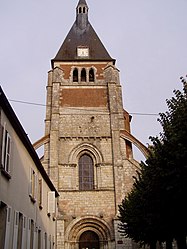
One of the most notable examples of peasant initiative in improving their position was the Customs of Lorris.  This was a blueprint for how a village might be organized, with the obligations of the peasants spelled out.  It started, as the name implies, in the village of Lorris, early in the twelfth century.  (Lorris is east of Olrleans in central France, in the Loire valley.  This is the bell tower on its medieval church.)

Bell tower

The local lord had granted a series of privileges to his peasants in what was called a "charter of liberty" or a "franchise," and he asked King Louis VI to confirm it, which he did.  The lord's purpose was to make the villagers happy, to attract new villagers to a territory that was being economically developed, and to get a steady revenue stream without having to hassle and badger the villagers of Lorris.  These Customs were then reaffirmed in the following generations by subsequent kings, and they were widely copied all over northern France.

From the peasants' point of view, the principal advantage was regular, predictable obligations, instead of arbitrary or capricious demands.  Each peasant family received a house in the village and sufficient land in the surrounding territory to raise their crops, and the family paid 6 pennies a year for this.  They had no labor dues, no unexpected demands for goods or services.  They could not be expected to join a military expedition unless it took them no more than a day away from home.  No tolls would be charged on peasants heading out of the village to take their crops to market.  The only extra tidbit the king threw in was that the village would have to provide food for the king and queen for up to two weeks a year if they stayed in Lorris.

But most of the Customs granted the peasants autonomy.  Every family in the village paid the same rent, which was unusual in the twelfth century, when there was a patchwork of different obligations, probably a further indication that Lorris was a newly planned and laid out settlement.  Families were free to sell their houses and land if they wished and leave; clearly the lord of Lorris did not anticipate that many would want to.  Fines for various infractions were clearly specified, and it was stressed that no one would be imprisoned unless accused of a crime.

Overall, the Customs gave the villagers of Lorris, and the other villages where they were adopted, identity as citizens of a particular place, rather than just dependents of one lord or another.  Every indication is that they paid good money to their lord in return for the grant of these Customs.  Although the Customs in the form we now have them do not spell out the negotiations that led them to taking the form they now have, but there must have been considerable discussion for the lord to know what the peasants would agree to and what obligations they were willing to undertake.  The autonomy, the ability to determine ahead of time how much they were expected to produce, was from their point of view worth it.

© C. Dale Brittain 2021

For more on medieval peasants, see my ebook, Positively Medieval:  Life and Society in the Middle Ages.  Also available in paperback.


Sunday, August 16, 2020

Suger

Today I want to talk about Suger, one of the most important political and ecclesiastical figures of twelfth-century France (c. 1081-1151).  And no, his name is not Sugar, it's Suger, pronounced soo-zhay.  Here's an image of him from a stained glass window.


Suger is best known now as a counselor and biographer of King Louis VI (1108-1137) and as abbot of the monastery of St.-Denis.  He was a lifelong friend of the king, because back when Prince Louis was attending school in Paris, young Suger was also.  Schools were run by churches, and although the majority of the young men attending expected to have a career in the church, lay people might also attend as day students, as did Louis.

Suger became a monk at the abbey of St.-Denis, located not far outside of Paris.  (You can get there on the metro.  Be sure to get off at the "basilica" St.-Denis stop, not the "stadium" St.-Denis stop.  France's biggest soccer/football stadium is right down the road from the old abbey.)  This was considered a royal monastery, and many kings and queens of France were buried there, going back to the Merovingians.

It was dedicated to Saint Dennis, the supposed first bishop of Paris way back around the second century, who had been beheaded by the Romans for refusing to worship the pagan gods.  He was martyred on Montmartre ("mountain of the martyr") but then, to everyone's surprise, he picked up his head and started walking.  He'd gotten out to the suburbs before collapsing.  The abbey was built over his remains.  (One doubts he had gone out to catch one last football game.)

When the old abbot of St.-Denis died, Suger was elected abbot in 1122, presumably with some friendly hints from the crown.  Although the monastery was never known for its austerity, unlike the new monastic orders such as the Cistercians, it was free from scandal, and the monks prayed and were serious, even if well-fed.

Suger's major accomplishment as abbot was to rebuild his abbey's church.  He described the process proudly, including his miraculous discovery of enough old-growth oaks for the roof beams, when everyone told him there were no big trees left in the region.  (Notre-Dame, built a generation later, had to get their roof beams--burned in 2019--from all over and float them down to Paris.)  St.-Denis is considered the first Gothic church, marked by tall, thin walls and pointed (rather than rounded) arches.  It was dedicated in the presence of the king in 1144.    (Suger actually just rebuilt the western facade, seen below, and the choir at the opposite end, leaving the eighth-century nave in place, to finally be rebuilt a century later.)  His abbey church looks rather sad today, but it went through a lot in the French Revolution (including having all the kings and queens buried there dug up and tossed out).


After the death of Louis VI, Suger wrote an admiring biography of his old friend, usually translated today as "Deeds of Louis the Fat."  Well, it's not quite fair to think of Louis only in terms of his weight, because he was indeed a very effective and beloved king.  His father, Philip I, had toward the end of his life been said to be too fat to ride a horse, which is something.  Philip had also repudiated Queen Bertha, Louis's mother, because he said she was "too fat."  Hormones.  Louis didn't stand a chance.

When Louis VII (king 1137-1180), son of Louis VI, decided to go off on Crusade in 1147, Suger became regent of France.  At this time usually wives acted as regents for absent husbands, but Louis VII's wife, Eleanor of Aquitaine, accompanied him to the Holy Land.  But that's another story.

When Suger died, he had started a biography of Louis VII, obviously not completed as the king outlived him by almost thirty years.  But Suger's name was permanently associated with the French kings.

© C. Dale Brittain 2020

For more on monks, kings, and other aspects of life in the Middle Ages, see my ebook, Positively Medieval, available from Amazon and other major ebook platforms.  Also available in paperback!


Saturday, December 20, 2014

The Capetians

The Capetian dynasty is the longest line of kings in the world, with straight, father-to-son inheritance from Hugh Capet, king of the Franks in 987, through eight centuries of French kings, to the modern kings of Spain.  (The queen of England claims the ninth-century King Alfred and even the legendary Hengist and Horsa, leaders of the Anglo-Saxon invaders of Britain in the fifth century, among her ancestors, but there are a lot of detours in between.)

The Capetian family, who had originally held power in the Rhineland, gained power in France in the ninth century leading the resistance against the Vikings.  The Carolingians, the descendants of Charlemagne, provided little leadership (and the German branch of the Carolingians soon died out), so there were several kings in the family as well as counts and dukes before Hugh Capet was elected king of the Franks (see here for more on royal election).  Modern scholars call his family "the Capetians" in his honor.


Capet was later taken as a last name, but people did not have last names in the tenth century.  Capet was rather a nickname, to keep him distinct from other men named Hugh.  It means "little cape," and he had the nickname because he was abbot of the monastery of Saint Martin (yes, powerful laymen at this time often appropriated monasteries).  Saint Martin was the Roman soldier-saint who had supposedly seen a beggar cold and wet by the road and given him half his cloak (cutting it in two with his sword).  When the beggar transformed into Christ, Martin was understandably surprised and took up a religious life at once.  The monks of his monastery preserved the half a cloak he had left as a relic.

The Capetians had been counts of Paris before becoming kings, which is why Paris is now the capital of France.  Initially they had less power and property than a lot of their dukes, but they had ambitions.  At the end of the eleventh century King Philip I named his son Louis, which was a much more royal-sounding name than Hugh or Philip or Robert, which is what men in the family had previously been called (there was also a Megingoz back there, but let's not worry about him.)

Supposedly Philip I and his queen had been praying for a son, and a wise old hermit they visited blessed them, told them to expect a son, and gave them permission to call him Louis.  Louis was the name of Charlemagne's heir and also the name of the first king of France of the Merovingian line back in the fifth century (who is usually called Clovis in French or English--put C on the front of Louis and see what you've got--even though he probably called himself Chlovodech).  From then on until the French Revolution, almost all French kings were named Louis or Philip (especially Louis), with the exception of the occasional Charles or Frances or Henry.

Philip II (1180-1223) is now considered the creator of modern France.  Nicknamed Augustus, he drove the kings of England out of Normandy and consolidated royal rule.  He also got into major trouble for trying to divorce his wife, Ingeborg of Denmark, but that's a different story.

© C. Dale Brittain 2014

For more on medieval kings, see my new ebook, Positively Medieval: Life and Society in the Middle Ages.


Thursday, July 10, 2014

Royal Divorce in the Middle Ages

In a previous post I discussed medieval divorce.  Here I give a couple examples of famous divorces that helped shape medieval marriage and divorce law.

Marriage was just becoming a sacrament in the ninth century when King Lothar II decided to divorce his wife, Tetburgis, and instead marry Waldrada, his former concubine.  Tetburgis was of a much more powerful family than the relatively low-born Waldrada, so the marriage had made sense originally.  But after several years in which Tetburgis did not get pregnant--although Waldrada had produced a son for the king--Lothar decided to elevate the girl he'd always liked.

At this point the bishops jumped all over him.  Marriage was permanent, they said.  So Lothar had to find a way to get Tetburgis out of the way.  First she was bribed to say she wanted to become a nun and had never willingly given her oath of marriage in the first place, but this only worked until she changed her mind.  (Two centuries later, one spouse entering the church would have required both spouses to enter the church, but the ninth century was still figuring this out.)

Then Lothar accused Tetburgis of adultery.  When this did not win him the desired divorce, he upped it to incestuous adultery with her brother.  When even this didn't work, he tried incestuous adultery in an unnatural position which had made her give birth to a monstrous fetus, explaining why she couldn't get pregnant now.  Unfortunately, no one believed him.  The case involved bishops, the pope, other kings, and all the relatives.  Only Lothar's death ten years later ended the excitement.

Two centuries later, at the end of the eleventh century, King Philip I of France also ran into trouble when he tried to get a divorce.  He and his queen, Bertha of Holland, had successfully produced a son, the future Louis VI.  But then Philip took a dislike to Bertha and accused her of being "too fat."  This was rich, coming from Philip, who himself got so fat he was unable to ride a horse.  (Louis VI was later nicknamed "the Fat."  Hormones.)

Instead Philip hooked up with Bertrada, wife of the count of Anjou.  The count of Anjou was understandably furious and wrote a long treatise on the history of the counts of Anjou, whose subtext was that his family was wonderful and the royal line was degraded incompetents.  If this was supposed to win Bertrada back, it didn't work.  The bishops and eventually the pope also got on Philip's case.  He was even excommunicated at one point for refusing to listen to the church; being excommunicated did have the advantage of getting him out of going on the First Crusade.  Finally he promised the pope to give up Bertrada "right away."  In fact he did no such thing, but the pope was fighting the German king at this point and worrying about the Crusade, so he turned a blind eye, so Philip, Bertrada, and their children continued as a happy family.

Louis VI, who took over effective governance of France during the final years of his father's life, was not happy about this, however, especially since Bertrada apparently tried at one point to poison him.

Coming up soon, more royal divorces.

© C. Dale Brittain 2014

For medieval marriage, divorce, and so much more, see my ebook, Positively Medieval:  Life and Society in the Middle Ages.