Showing posts with label medieval peasants. Show all posts

Wednesday, June 10, 2026

Still Medieval After All These YearsAs

As I announced back in March, I've been working on a new book, and now it's out!  It's called "Still Medieval After All These Years," and it started life with this blog.


 The book's purpose is to discuss some aspects of medieval society I never got to in my first so-called blog book, "Positively Medieval: Life and Society in the Middle Ages."


Specifically, I have much more to same about peasants, their status and opportunities, and about food and beverage.  (Did you know lasagna is probably a Norman dish? Introduced by them into Italy? No tomato sauce, though.). Then I go on to discuss how medieval buildings were built, how medieval people kept healthy, and a lot on the medieval church and religion.

But the newest aspect is a focus on how much modern society owes to the Middle Ages, whether we want to acknowledge it or not.  Even though we've decided we are "modern," the medieval keeps tempting us, including (strangely enough) notions that somehow life was better then and that we should be able to use the Middle Ages as a model for a racially and religiously pure society.  (Um, that's not going to work.) 

(I also talk about medieval-themed fantasy fiction. That aspect is fine.)

Anyway, the book is now available on Amazon, both as an ebook and a paperback.  Here's the paperback link.  It's also on Barnes & Noble as an ebook and will shortly be available on all major ebook platforms, and it can be ordered through any bookstore. 

The ebook has color pictures if you read on a computer or tablet, black and white on a Kindle or as a paperback.  They're all my photos, so you get in effect a travelogue as well as social history. Hope you enjoy!

© C. Dale Brittain 2026 

Tuesday, September 5, 2023

Homesteading

 Ever since the Industrial Revolution, when millions of people left farming for work in the factories, there has been some sort of "back to the farm" movement.  People lose track of why they left the farm in the first place, and people who have never farmed, but want to break away from factories and urban life, think of farming with a sort of golden glow.

In recent years this "back to the farm" concept has been branded as "homesteading."  Originally American homesteading meant people getting a certain number of acres of unoccupied frontier land (at least land that was unoccupied once the indigenous people had been driven off), and they could keep it if they farmed it successfully for a certain number of years.  But more recently the term has come to mean making one's living on a farm, after having had a quite different sort of career.

It's easy to be nostalgic for a rural past, without the hurly-burly of modern life, without the noise and industrial pollution, living as self-reliant, close to home, interacting with one's family most of the day rather than just after work, eating wholesome home-grown food.  The rural population is often described as being the "real Americans."  Popular "country music" evokes the rural (or at least small-town) life.  The Middle Ages, when almost everyone was involved in farming, is often seen as epitomizing this rural past.  On this blog, the entry about medieval farm animals has been the most popular for nine years, ever since I first posted it.


 But farming is very hard work, and if you're imagining the fresh scent of clover as greeting you in the morning, add to that the fresh scent of the manure pile.  Modern homesteaders have advantages medieval peasants never dreamed of.  Starting with the fact that they live in the twenty-first century, even if they're engaging in activities that have roots going back ten or twelve thousand years.

Their farms have electricity, TVs, internet connections, and modern plumbing.  Their kids ride the school bus to get educated.  They have cars and/or trucks to get to town, for shopping, for entertainment, to settle legal issues, and to get medical assistance if needed.  Driving a tractor is a lot easier than walking back and forth across the field behind a plow.  They can sell their hand-crafted honey (or whatever) on their website for extra money.  If they haven't canned enough vegetables to last through the winter (recalling that modern canning was invented in the nineteenth century) they can buy fresh produce at the grocery store, imported from California or South America.

You've got to admire our ancestors.  They were tough and resourceful, and it's a wonder enough of them survived to produce the generations that led to us.  Few of us would survive a year as a medieval peasant.

Fortunately we don't have to!

© C. Dale Brittain 2023

 For more on peasant farming and other aspects of medieval history, see my ebook Positively Medieval, available on Amazon and other ebook platforms.  Also available in paperback.


Friday, April 28, 2023

The "Three Orders" and medieval historians

 If you've been reading this blog for a while, you'll know that it is simply false that medieval society was tidily divided into three orders.  The idea of "orders of society" had long been around, because medieval people (like us) liked to create categories, but these were theoretical rather than official.  For example, one theory was that society's three groups were cloistered virgins (monks and nuns), secular clergy (priests and bishops), and lay people.  Or perhaps there were just two, the unchaste and the virgins (these two could become three if married people became a third category).  Or maybe the two divisions of society were the powerful and the weak.  Or simply men and women.

The division of society into "those who pray, those who fight, and those who labor" was proposed in the early eleventh century and then ignored until the creation of the French Estates General in the fourteenth century, where the Estates were churchmen, aristocrats, and wealthy townspeople (wait, you say, what happened to peasants? well they didn't count).

It shows you how little influence the "three orders" had that England's Parliament, established slightly earlier, had only two houses, the House of Lords and the House of Commons.  The Lords included both church leaders and secular nobles, whereas the knights of the shire, who would have been in the "second estate" in France, were instead part of the Commons with the wealthy townspeople.  (And you note there arr still no peasants.)


(Parliament then and now meets in Westminster, near the church where King Charles III will soon be crowned.)

So even though there was no tidy division into three orders in the Middle Ages, there's always been a sense that there were different statuses in society.  Church men and women had different lives than powerful lay people, who in turn were different from townspeople or from peasants.

Interestingly, historians who study the Middle Ages loosely follow the eleventh-century theory about society's divisions in choosing what to study.  Given a choice of three groups, most historians choose only one, or at most two.  That is, someone might study the nobility and the church but pay little attention to peasants (or townspeople).  Or, as is the case with the many French historians who write regional monographs, one might study nobles and peasants but essentially ignore the church.  Interestingly, scholars essentially never study both peasants and the church, although some have focused their research on urban areas and included both urban churches and townspeople.

And of course even one of these groups provides plenty of opportunity for study.  Within the church there are monks, nuns, priests, friars, bishops, popes, and various hangers-on.  And the study of religion and religious ideas goes well beyond the study of people within the church.  Knights and nobles can be studied for their families, for their role in politics, for ideas of chivalry, for medieval warfare.  The "everybody else" group included 80-90% of the population, everything from desperately poor laborers to wealthy merchants, so there's lots there to study.  And women can be treated as a separate group within all of these.

If "society was divided into three orders" was as simple as high school textbooks might lead you to believe, medieval historians wouldn't still be writing exciting new books and I wouldn't have a blog with over 500 posts and no end in sight.

© C. Dale Brittain 2023

For more on society during the Middle Ages, see my ebook, Positively Medieval:  Life and Society in the Middle Ages.  Also available in paperback.


Sunday, December 11, 2022

Medieval Slavery

 The ancient Mediterranean region had been a society of slavery.  Slaves then were usually people who had been captured in battle, or the children/descendants of such people.  Slavery is distinguished from other sorts of subservience by the fact that slaves are treated as having no will of their own.  They cannot say No to any command, no matter how arbitrary or foolish, and they can be bought and sold like animals.  Ancient slavery did not have the racial component of later slavery in the Americas, because slaves might be the captured citizens of a different city located only a few dozen miles away, who had (until captured) shared language, religion, and culture with their captors.

The Roman Empire was built on slavery.  Rather than just raiding their neighbors, they captured hundreds of people from all over their vast territory.  Successful generals would have big parades, with captured slaves in chains walking along with the carts piled high with loot.  Some slaves were well treated, but there was no penalty for maltreating one's slaves, and even well treated slaves had nothing that we would call rights.  Runaway slaves would be captured and brought back.  In the city of Rome itself, slaves probably outnumbered the free people, and the Senate periodically worried that the slaves would figure this out and revolt (which they sometimes did anyway).

Mediterranean-region slaves might be given responsibility as school teachers, or those who ran shops, or those who ran a household, even as the equivalent of policemen in ancient Athens.  Certainly not every family had slaves, but all well-to-do ones did.  The gladiators who fought for the entertainment of the Roman masses were slaves.  The Romans used slaves for agriculture, working them very hard, even to death on big plantations.  Many Roman citizens in the countryside worked their own fields, and indeed it was from such yeomen farmers that the Roman legions were recruited, but with a lot of the young men off fighting, slaves made up the difference.

All of this changed in late antiquity.  Once the Roman legions stopped winning and bringing home new captured slaves, an economy built on the labor of slaves considered disposable become unsustainable.  With the breakdown of many of the structures of the Empire, due in part to changing climate, disease, and the rise of Islam, slaves could just run away.  In addition, freeing one's slaves became considered a Christian duty once the Empire became Christian, and it was clear that one was not supposed to enslave someone already a Christian.

Agricultural slavery was replaced during the sixth and seventh centuries by serfdom, as I have discussed earlier.  Serfs were not really free (and the term servus was the same Latin word used for slaves), but serfs could not be bought and sold or treated horribly without repercussions.  Most importantly, serfs had their own houses and own families and own plots of lands on which they raised their own food, rather than just being worked in gangs until they dropped, to be replaced by new slaves.

Household slavery continued until the eighth or ninth century in some cases, and one would never have wanted to be a serf, but for much of the Middle Ages slavery was not found in the West.  Slavs (in the Balkans and further east), who were not yet Christian, might be captured and sold as slaves (Slav is the root of the word slave), and Muslims and Christians might sometimes have engaged in the slave trade with each other around the Mediterranean, but this was rare.

But slavery returned at the end of the Middle Ages.  Both legal scholars at the universities and town councils in Renaissance Italy studied Roman law, where there was a great deal said about slavery.  North of the Mediterranean, there were attempts to reimpose serfdom, which had been dying out since the twelfth century. as I have discussed earlier.  In Italy, which considered itself the heir to Rome, slavery was once again considered appropriate.

And then Europeans started exploring the rest of the world in the late fifteenth century, discovering all sorts of people, especially in Africa and the Americas, who seemed very strange by their standards, thus perhaps to be treated as a lesser race, and who were not Christians.  With Roman law as their guide, people of the early modern period re-embraced slavery.

Today, one hopes, almost everyone would agree that slavery, treating humans like animals, is wrong.  But it has only been gone in the West (including North America) for about 150 years, and its legacy deplorably still lingers.

© C. Dale Brittain 2022

For more on medieval peasants, see my new ebook, Positively Medieval: Life and Society in the Middle Ages. Also available in paperback.


Sunday, October 10, 2021

The Peasant Bodo

 Peasants keep appearing in this blog, for the excellent reason that they were by far the bulk of the medieval population, maybe 90%.  Today I want to discuss one particular peasant, named Bodo, who has become (and he'd be shocked to learn it), the "Standard Medieval Peasant."  I am discussing him because he provides a good starting point for pointing how how unfounded are many of the sweeping assumptions modern folks have about medieval people.

Bodo was a real person.  He lived in the early decades of the ninth century on a manor belonging to the Parisian monastery of St.-Germain-des-PrĂ©s.  He is known because the monastery did an inventory of all its manors, including this one (located outside of Paris), listing the tenants by name and detailing how much each owed in rent.  Bodo was required to work a certain number of days a week on the fields belonging to the big manor house.

The monastery's records about Bodo are extremely skimpy, not much more than this, though noting he had a wife, Ermentrudis, and three (unnamed) children.  In 1924 the historian Eileen Power wrote a book, Medieval People, designed  to give ordinary people more of a role in accounts of the Middle Ages--at the time most historians were focused on institutions, great men, and the rise of the nation state.

This was laudable of course, but she made some great leaps in fleshing out Bodo's story.  She described Bodo's manor as looking like what Charlemagne had, two generations earlier, said he wanted a royal manor to look.  (One must wonder if a monastery had the same idealized vision as a king, much less whether any of Charlemagne's manors ever looked the way he envisioned.)  She added in detail from Ireland and Anglo-Saxon England, plus even some manorial rolls from the end of the Middle Ages.  She also gave Bodo and his wife three named children as well as an ox.

The real problem with this "artist's conception" of Bodo is that he has become the standard version of every medieval peasant.  Because Power did not describe any peasants from later centuries, Bodo has come to stand for every medieval peasant, giving a timeless quality to descriptions of peasant life.  Every popular account of "life in the Middle Ages" includes something like the image below, with a castle or manor house, a grouping of peasant houses and a church, and the fields stretching off in all directions.  Although not in this particular image, it's also common to show a barefooted peasant with an ox.  (It's Bodo!)

(Actually I think I see Bodo over near the left, leading his ox, who is bringing a cartload of, I assume, food to the castle/manor house.)

 See original image 

The problem is that Bodo and his manor are typical only of great ninth-century manors with their tenants.  Especially as the economy improved and new lands were cleared for agriculture in the eleventh-thirteenth centuries, due to peasant initiative, this "typical" arrangement became less and less typical.

 Most peasant villages had neither a castle or a manor house.  Many of the peasants might be tenants of a monastery or a secular lord, but he (or she or they in the case of a monastery) lived some distance away.  And a lot of peasants were what is called allodists, that is they owned their property outright rather than being tenants.

Even the tenants owed much less in labor dues by the twelfth century than they had in the ninth century.  Peasants had been able to negotiate their way out of them, usually for a monetary payment.  The landlord found it easier to hire workers than to try to force unwilling peasants to work.  These payments were fixed in perpetuity, which meant that the amount the peasants had to pay declined in value, while wages for hired labor went up.  "Works for us!" said the peasants.  Bodo would have been jealous.

© C. Dale Brittain 2021

For medieval peasants and so much more, see my ebook, Positively Medieval:  Life and Society in the Middle Ages.  Also available in paperback.

Tuesday, June 29, 2021

The "feudal revolution"

 A generation ago there was a great debate among medieval historians about what was termed a "feudal revolution" of the year 1000.  It has more or less exhausted the debaters, but it still keeps popping up in discussions of the eleventh century, so I thought I should discuss it.  (Note: medievalists these days all hate the word feudalism, with its plethora of contradictory meanings, but it keeps popping up anyway.)

This is what is called a "historiographic" debate, that is a discussion by historians of what happened and what does it mean, and why so-and-so's argument should have long been dismissed, and somebody-or-other's argument is full of novel insights.  I'm not going to get into the historiography here (naming all the participants of the debate and summarizing their points), but I should note that this is why the discipline of History is a lot more than what happened in what order.

Basically the issue of the "feudal revolution" was the question of whether the changes of the early eleventh century represented a radical break with preceding years or whether there was gradual change.  Although, as I have earlier discussed, nobody at the time thought the world was going to end in the year 1000, that year marks a handy break point between the Carolingian era (eighth through tenth centuries) and the high Middle Ages, the beginning of the Capetian era (Hugh Capet became king of France in 987, replacing the last Carolingian).


There is no question that a lot of changes took place in the years just before and after 1000 that seriously affected society.  Especially the economy improved, a slightly warmer and drier climate making possible more reliable crops, and this increase in food production accompanied by the growth of towns, new trade routes, the clearing of forests and marshes for more agricultural land, and demographic growth.

This is also the time the first castles were built--there had long been fortresses, and there had long been palaces, but a castle combined elements of both, an elegant home for a lord that was also defensible.  Knights also appeared for the first time, gaining visibility through the Peace of God councils that urged them not to attack the defenseless.  The lords in their castles, surrounded by their knights, began assessing what were called "banal" dues, requirements that everyone in the region pay them some sort of fee, whether or not they were the lord's tenants.

How big a change was this?  Supporters of a radical break have described the rise of castles and banal lordship as leading to new impositions on peasants, who were supposedly forced to toil even harder than ever for their pitiless overlords.  The problem with this is that, although there are a lot of complaints in the eleventh century that "new and unheard of burdens" were being put on the poor (usually complaints from the poor themselves or their advocates in the monasteries), it had been common for hundreds of years to label anything bad as "new and unheard of."

Medieval people totally believed in tradition and the good old ways.  They were doing new things all the time, but they always had to be explained as not really new or, better yet, returning to the good old ways the way they had been before recent efforts to mess them up.  Thus anything bad was "new," whether it was really new or not.

The gradualist side of the "feudal revolution" debate has assembled a large number of examples of institutions and developments that were underway well before the year 1000.  I myself am fairly firmly on the gradualist side, except for one aspect.  The more determined "no-feudal-revolution"folks want to deny that knights were a new phenomenon around the year 1000.

I'm sorry, knights were new.  You can't be a knight without a horse and affordable horseshoes, which they just didn't have before the late tenth century.  Efforts to claim that Roman legions were just like knights or that any mention of a sword or shield must equate with knighthood are, shall we saw, unconvincing.  Chivalry, the complex set of ideas of how knights should behave, was a late eleventh-century development, not something to be equated with ancient Roman stoicism.

But in one way I think the "revolutionaries" are right, and that is that things changed a lot for the peasants in the eleventh century.  But not in the way they think.  My own analysis of the documents suggests that the eleventh century was not a disaster for peasants but rather a time when the improving economy made life substantially better for the peasants, the ones after all who grew the food.

See how fun historiography can be?

© C. Dale Brittain 2021


For more on medieval life, see my new ebook, Positively Medieval: Life and Society in the Middle Ages.  Also available in paperback.

Saturday, April 3, 2021

The Customs of Lorris

 As I have discussed earlier, medieval peasants were neither passive nor helpless creatures.  After all, they outnumbered the rest of the population by a considerable amount, and if they didn't grow the food, the lord would have to be out there himself behind the plow, or else the food didn't get grown.  Peasants were thus a valuable commodity, and at least some lords figured out that making them happy was usually preferable to beating and threatening.  Medieval peasants lived in conditions those of us in the twenty-first century West would find intolerable, but that didn't mean they could do nothing to help themselves.  There was plenty they could do short of revolting.

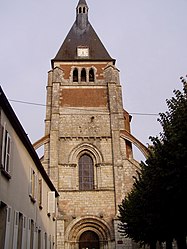
One of the most notable examples of peasant initiative in improving their position was the Customs of Lorris.  This was a blueprint for how a village might be organized, with the obligations of the peasants spelled out.  It started, as the name implies, in the village of Lorris, early in the twelfth century.  (Lorris is east of Olrleans in central France, in the Loire valley.  This is the bell tower on its medieval church.)

Bell tower

The local lord had granted a series of privileges to his peasants in what was called a "charter of liberty" or a "franchise," and he asked King Louis VI to confirm it, which he did.  The lord's purpose was to make the villagers happy, to attract new villagers to a territory that was being economically developed, and to get a steady revenue stream without having to hassle and badger the villagers of Lorris.  These Customs were then reaffirmed in the following generations by subsequent kings, and they were widely copied all over northern France.

From the peasants' point of view, the principal advantage was regular, predictable obligations, instead of arbitrary or capricious demands.  Each peasant family received a house in the village and sufficient land in the surrounding territory to raise their crops, and the family paid 6 pennies a year for this.  They had no labor dues, no unexpected demands for goods or services.  They could not be expected to join a military expedition unless it took them no more than a day away from home.  No tolls would be charged on peasants heading out of the village to take their crops to market.  The only extra tidbit the king threw in was that the village would have to provide food for the king and queen for up to two weeks a year if they stayed in Lorris.

But most of the Customs granted the peasants autonomy.  Every family in the village paid the same rent, which was unusual in the twelfth century, when there was a patchwork of different obligations, probably a further indication that Lorris was a newly planned and laid out settlement.  Families were free to sell their houses and land if they wished and leave; clearly the lord of Lorris did not anticipate that many would want to.  Fines for various infractions were clearly specified, and it was stressed that no one would be imprisoned unless accused of a crime.

Overall, the Customs gave the villagers of Lorris, and the other villages where they were adopted, identity as citizens of a particular place, rather than just dependents of one lord or another.  Every indication is that they paid good money to their lord in return for the grant of these Customs.  Although the Customs in the form we now have them do not spell out the negotiations that led them to taking the form they now have, but there must have been considerable discussion for the lord to know what the peasants would agree to and what obligations they were willing to undertake.  The autonomy, the ability to determine ahead of time how much they were expected to produce, was from their point of view worth it.

© C. Dale Brittain 2021

For more on medieval peasants, see my ebook, Positively Medieval:  Life and Society in the Middle Ages.  Also available in paperback.


Sunday, August 9, 2020

Christ Stopped at Eboli

Lately I've been working on a book about medieval peasants.  So I've been looking at medieval documents in which peasants appear (there are a lot more such documents than has generally been assumed) and also at scholars' attitudes toward peasants.  If one assumes (as has too often been done) that peasants were silent, marginal, and passive and thus did not appear in the documents, then of course one will not look for them.  (As you probably guessed, I argue instead for active peasants.)

There has also been an assumption that peasant life was unchanging, that it has been the same for thousands of years.  I have also been reading Carlo Levi's classic book, Christ Stopped at Eboli, which makes this assumption.

Levi was an interesting person, a doctor and painter who got on the wrong side of the Fascists under Mussolini.  In 1935 he was sent into political exile from his native Torino to a little village way down in the foot part of the "boot" of the Italian peninsula, and he spent a year there, among those he called "my peasants."


He was pardoned after a year and hurried back to northern Italy.  But because he was Jewish, he was soon in trouble again and had to go into hiding.  While in hiding he wrote a memoir of his year in a peasant village, published in Italian in 1945 right at the end of the war, and translated into English in 1947.  It is still in print, in Italian, English, and many other languages.  His depiction of the very harsh life of southern Italian villagers brought their plight to the attention of the post-war Italian government, which sought to improve things.

The memoir is called Christ Stopped at Eboli NOT in the rather sweet, sentimental sense of "Jesus stopped off in Eboli for the night and did some miracles while he was there."  Rather, it means that Christianity and civilization got as far south in Italy as Eboli but didn't get any further.  Eboli is about two-thirds of the way down the peninsula, a short distance south of Naples, and at that point the train lines that had been following the coast south turned east instead, ignoring the south.  Here's how Levi defines it:

"We're not Christians," they [the peasants] say.  "Christ stopped short of here, at Eboli."  "Christian" in their way of speaking means "human being." ...  We're not Christians, we're not human beings; we're not thought of as men but simply as beasts, beasts of burden.  ...  Christ never came, just as the Romans never came, ... nor the Greeks.  ...  None of the pioneers of Western civilization brought here his sense of the passage of time, the deification of the State.  ...  The seasons pass today over the toil of the peasants, just as they did three thousand years before Christ."

This is certainly evocative.  But were the villagers among whom Levi lived for a year leading a life unchanged from the Middle Ages, much less the Bronze Age?  One would have to say NO.

To begin with, they were Christian.  There was a church in the village with a priest.  When Levi arrived they took their sick children to him, not because there was no other doctor, for there were in fact two other doctors, both trained at the University of Naples, a university that did not exist in the Middle Ages.  But both the villagers and Levi considered these men grossly incompetent, and the villagers added that the doctors were not "Christian."  So they did indeed use the term Christian to mean a competent human, but their use of the term here certainly indicates they believed themselves good Christians in contrast.

And the State had reached their village.  There were carabinieri, the national police.  The whole idea of political prisoners requires a state and politics—and there were several other political prisoners there besides Levi.  The mayor was proud of how Fascist he was; a medieval village might well have had a mayor but nothing comparable to positioning in a political party.

Some of the material culture of modernity had also reached the village.  Levi was brought there in an automobile.  There was electricity, even though he said dismissively it might be a single bulb hung from the ceiling.  Most of the villagers could read and write; there was a public school, where among other things they learned standard Italian, so Levi could talk to them without understanding their local dialect.  There was daily mail service, even if brought in on a mule.  There was even a public restroom with running water, though he claimed he was the only person ever to use it.  The villagers grew and ate tomatoes, which their medieval ancestors would not have done, as they are a New World food.  Some people from the village had moved to America.

This was not a land untouched by time.  Back in the early nineteenth century one might have been able to make such a case a bit more plausibly, but these villagers were living in the twentieth century, even if a different version of the twentieth century than Levi's friends back in Torino.  (In the same way, the Amish today are living in the twenty-first century, even if they don't have TV or drive cars.)

So what did the villagers mean when they said that Christ stopped at Eboli?  Levi thought it meant that they considered themselves inferior, scarcely human.  Given the grim conditions under which they lived (as he described it), my own interpretation of what he called a "proverbial phrase" is something closer to that song in the show Paint Your Wagon, "I'm so lost, so goldarn lost, not even God can find me."  They weren't saying they were inferior.  They were saying everyone had forgotten about them, even Christ.

© C. Dale Brittain 2020

For more on medieval life, see my new ebook, Positively Medieval: Life and Society in the Middle Ages.  Also available in paperback.


Thursday, May 30, 2019

Tiny Houses

There's a trend now to "tiny houses."  Of course most people aren't interested in such things, except perhaps as a backyard studio (for one thing, where would you put all the Stuff?), but the idea of a radically simple lifestyle, a few hundred square feet with just enough space for a tiny kitchen, a bed, a place to sit and a place to eat, has a certain appeal.


Now if a tiny house is going to function today it needs plumbing and electricity and a stove and a refrigerator, at a minimum.  Medieval people (most of them) lived in what we'd call tiny houses, but it wasn't because it was trendy.  It was because that's what houses were like.

Okay, a medieval castle was a pretty big building.  But let's face it.  Most of us our ancestors were peasants, living not in castles but in what we would probably be more likely to describe as a "hut" than a "cottage."  They didn't have plumbing or electricity or stoves or refrigerators or furnaces.  They did however have a place to sleep and a place to sit and a place to eat.  Cooking could either take place over an indoor fire (usually an open fire in the middle of the room rather than in a fireplace) or over an outdoor fire out back.  There might be a spring house to keep things cool, but there was no refrigeration.  There was certainly no plumbing.  There might not even be a privy, though there was always the handy dung heap.

These houses were usually made out of wattle and daub, sticks (not big pieces of wood) woven together and filled in with mud, plaster, or dung, and maybe some stones or old Roman bricks.  (See more here on medieval building materials.)  The floor would be dirt.  You had to be a fancy person to have a tile floor.  Peasants did not however like being dirty, and archaeology has revealed that the floors of a lot of these houses were vigorously swept so much that one might have to step down to get in from outside.

We think of houses in the US as being free standing, but medieval peasants' houses were usually snuggled up to the barn, where the animals were kept.  They didn't actually share their space with animals (other than maybe a cat), but the animals were right on the other side of the wall.  This both made it easier to take care of them and provided extra body heat in the winter.

In town, houses were built right up next to each other.  They might be a little bigger than a peasant's house, in that they could be two or three stories tall, but a lot of people would live in one of those houses, and they were very close to their neighbors.


© C. Dale Brittain 2019

For more on peasants and other aspects of life in the Middle Ages, see the ebook, Positively Medieval, available from Amazon.


Friday, February 22, 2019

Serfs

What's a serf?  What's a peasant?  Given that pretty much everybody of western European ancestry is descended from peasants, this is something that it seems we'd like to know.

A "peasant" just means a country person, a farmer, someone engaged in agriculture.  The most common medieval term was rusticus (which you don't need to know Latin to interpret).  They worked extremely hard (as of course modern farmers do as well), but not all of them were serfs.


A serf (servus) was someone who was legally unfree, although exactly what this status entailed varied widely.  The term servus had been the term in Roman law for slaves, but medieval serfs were not slaves.  Slavery had died out in western Europe by the eighth century.  Serfs could not be bought and sold because they were not property, and killing a serf was murder just as was killing a free person.  They were not even usually referred to with the term servus.  More common were such terms as mancipius, collibertus, famulus, hospes, or colonus.  Because different regions might use different terms, it is nearly impossible to say what was the distinction between these different terms.

Mancipius suggests someone seized in the hand, collibertus someone with only partial liberty,  famulus someone who served the family, hospes someone who came from elsewhere, colonus someone who was supposed to open up new lands, but all we can say for sure is that medieval scribes knew what they meant and we're left trying to figure it out from context.

As legally unfree, a serf (of whatever variety) was not supposed to be able to enter the church--though some did--and was not supposed to be able to give testimony in court--though again, some did.  They were supposed to defer to their lord-of-the-body (as the person whose serf they were was called) in marriage and inheritance, because servile status was hereditary.

In some places, a serf was supposed to come before his lord once a year with a rope around his neck and some pennies on his head.  Serfs usually had to pay a fine if they married someone who was not a serf of the same lord.  And sometimes serfs had to pay an inheritance tax (called mainmort) if they weren't living at home when their parents died and wanted to take up their parents' house and land.

Serfs owed the same mix of rents as free peasants who had landlords--a combination of money, produce, and "work days" in which they worked in the lord's fields.  On the average, serfs had heavier labor dues (more work days) than free peasants, but they were not subject to arbitrary payments.  That is, the lords could not just demand whatever they wanted and get away with it.

A lot of serfs had both a lord-of-the-body and a separate landlord from whom they rented some additional land.  In addition, serfs, like everyone else in a region, were subject to the regional count and the diocesan bishop.  This helped, because they could play one off against another, complaining with heart-rending cries to count or bishop if someone tried to demand something of them not approved by tradition.  Peasants (including serfs) had nothing like the freedoms we now take for granted, but they still had agency, the ability to take charge of their own lives.

Serfdom essentially disappeared in France in the early twelfth century.  Understandably, serfs found the ritual with the rope and the pennies very humiliating, and many bought their way out--their lords were willing to take a large lump sum in return for never again receiving the pennies, whose value became less and less all the time.  Some forgot (or "forgot") that they were serfs, since in many respects they were indistinguishable from other peasants.  Other just ran away to lose themselves in the rapidly growing cities.

In England and Germany, however, serfdom lingered much longer than in France.  Christian Spain started having serfdom for the first time in the thirteenth century.  Russia acquired serfs for the first time at the end of the Middle Ages.

Interestingly, mainmort, the inheritance tax for those heirs not living at home with their parents, lasted for at least a century after serfdom had disappeared in France.  Eventually most peasants bought their way out of it.

© C. Dale Brittain 2019

For medieval peasants and so much more, see my ebook, Positively Medieval:  Life and Society in the Middle Ages.


Sunday, May 20, 2018

Peasant Revolts

 There's an old, rather tasteless joke:  "The peasants are revolting!"  "Yes, I agree, they smell like cows."  This blog post isn't about the joke.  Rather, it's about fourteenth-century peasant reactions to oppression.

There had been very little of what we would call class consciousness for most of the Middle Ages; that is, people on a manor or in a village or city had thought of themselves as a unit, but they didn’t think of those living on the next manor or in the next village or city as being inherently similar to them.  This changed in the fourteenth century.

Now, for the first time, peasants in one area began to think they had more in common with peasants in another area than they did with the rich and powerful close to whom they lived.  And they were intensely angry at the rich and powerful.

The result was not just the kind of rebellion that had occurred intermittently, when for example peasants on a particular manor felt they were being treated grossly unfairly and fought back.  This was widespread revolution, where peasants across large territories decided they needed to work together.

The elites had brought it on themselves.  In response to crop failures and a decreased number of farm workers after the outbreak of the Black Death, landlords attempted to crack down, enforcing rents and labor dues and making new demands, such as freezing wages for day laborers.  Taxes were also being imposed throughout England to pay for the war with France.  The peasants, not surprisingly, were not about to put up with this treatment.  Questions began to be asked:  What gave the powerful the right to be powerful?

It had long been assumed theologically that a hierarchical social organization on earth mirrored that of Heaven (God, archangels, regular angels, and so on), and that divisions of power and wealth were a sad necessity due to humanity’s sinful nature, the only way to keep all that sinning in check.  But now some people started saying openly that such divisions of power and wealth were themselves sinful.

In England, where the revolts became the fiercest, a popular little ditty went around, “When Adam dug and Eve span [past tense of to spin], Who was then a gentleman?”

The biggest revolt started in in 1381 in southeast England, led by a firebrand named Wat Tyler and by a radical cleric, John Ball.  Peasants, villagers, and townspeople joined together, burning manorial rolls and court records.  They reached London, convinced that King Richard II (seen below, a teenager at the time) would sympathize with them if he only knew what was going on.


Initially the young king negotiated with the revolutionaries, though one must wonder how sincere he was.  Wat Tyler’s group killed a number of leading figures, including the archbishop of Canterbury, then supposedly used his head as a football.  Having had enough, the crown cracked down, and the rebellion was brutally crushed, and its leaders killed.

Although no further peasants’ rebellion was as big, there continued to be smaller ones.  They were all put down, but in response concessions were quietly made, as those in charge realized that maybe the rebels did have a point.  There were no more attempts to impose taxes on peasants to pay for the war.  By the late fifteenth century, English peasants were much better off than they had been earlier.

Note:  I believe in non-violence.  But one does indeed need to stand up to oppression.

© C. Dale Brittain 2018


For more on peasants and other aspects of medieval history, see my ebook Positively Medieval, available on Amazon and other ebook platforms.


Tuesday, August 1, 2017

Peasant Agency

Medieval peasants. it is often now assumed, had little opportunity to express their own ideas or to choose for themselves what to do.  This is actually not true.  Although some peasants were legally restricted by having servile status, being "serfs" (not the same as slaves), all of them had opportunities for independent action or "agency," as the social scientists call it.

The term peasant means a country person (paysan in French, from pays, countryside), whose days are spent in farming, often paying rents and dues to a landowner who was supported and fed by the peasant's labor.  A peasant would live in a small village, not a town.  As much as we would all like to imagine we are descended from lords and ladies of the Middle Ages, most medieval people were peasants, and hence so were most of our ancestors.

These people, mostly being illiterate, did not produce written records, appearing instead either in the records of more powerful laymen or in records of the church.  Scholars thus long assumed they were marginal or even silent, at any rate not worth trying to study.  Interestingly, the same assumptions were once made about medieval women.  Once scholars stopped assuming "We'll find no information on women in the records" and thus didn't bother to look, and instead started looking, they found a lot.  The same is true of peasants.

Where peasants are seen most frequently is in legal disputes or in negotiations with their landlords.  Landlords were not in a position simply to impose whatever they wanted on their peasants.  Everyone believed in the value of tradition, meaning that sudden changes did not seem right, and even more importantly, peasants had a lot of leverage.  If a landlord gave them too hard a time, they could just leave.  No aristocrat wanted to end up walking behind his own plow or harvesting his own grain.

Peasants could also play different aristocrats off against each other.  Nobles wanted to be considered "defenders of the poor," and peasants knew that and could exploit it.  Where a serf had both a lord of the body and a landlord (different persons), he (or she) could appeal to one against the other.  Peasants could also appeal to the big regional courts.

In one well-known case, peasants appeared before the court complaining about a local noble, saying they were helpless, saying all they had was their "tormented voices."  They understood very well what all medieval people knew (though many moderns have forgotten), that professed weakness can be a real source of strength.  The court had little choice but to rule in favor of these "tormented" peasants.

It was through negotiation that twelfth-century peasants managed to get out of some of their more burdensome obligations.  For example, one of the markers of servitude was having to pay an annual head-tax, usually a penny a head.  Peasants who had been selling their produce to the growing towns and had saved up could and did offer their lords of the body a fairly large one-time payment in return for not having to pay the head-tax.  The lords of course accepted, but this meant that there was no longer an annual ceremony indicating that these particular peasants were serfs.  In a generation, they would have "forgotten" that they and their ancestors had ever been other than free peasants.

As landlords opened up previously-uncultivated land for farming during this period, they needed to attract peasants, and thus offered them low rents and the opportunity to regulate themselves in what was known as a commune.  In some cases the peasants insisted on having this in writing; the local priest could read it for them.

Certainly being a medieval peasant would not have been an easy life. By our standards even the most well-to-do were desperately poor, with none of the material goods we take for granted, living in a rough house with a dirt floor, snuggled up to the cowshed.  There was always the worrisome question whether the harvest would come in this year (no peasant ever decided he needed to go on a diet), and the back-breaking work would have worn them out by the time they were in their fifties.  But they were smart, and resourceful, and entirely capable of outwitting those who considered themselves their betters.

© C. Dale Brittain 2017

For more on medieval peasants, see my ebook, Positively Medieval:  Life and Society in the Middle Ages.


Sunday, October 9, 2016

Peasants and labor dues

One often hears that medieval peasants had to pay a certain percentage of their harvest and an unlimited amount of their labor to their landlords.  This (along with so many other myths about the Middle Ages) is not true.  They certainly owed produce and labor, but it wasn't unlimited.

This is because medieval peasants were not slaves, as I have discussed earlier.  Indeed, in the early twelfth century even serfdom, being legally bound to one's "lord of the body," disappeared in France (see more here).  But both serfs and free peasants owed rent, just like anybody who rents an apartment today owes rent.

The rents were generally a combination of money, of produce (like two bushels of wheat and a chicken each year), and labor (like having to work on the lord's land two days a week).  Rents were fixed and were not supposed to be raised.  You will note that they weren't a percentage of the crop; the only "percentage of the crop" in sight was tithes to the church, which many peasants did not pay at all because most villages out in the country did not have a church.

The labor dues were often the most valuable part of the rent to the landlord.  Unless he planned to be out there with the plow and the ox himself, he needed to have people working his fields to grow the food for his household--and to grow food that he could sell at market (thus generating cash to buy horses, silk, spices, jewelry, and all the other things aristocrats felt they needed).  If every tenant household had to provide someone to come work on the lord's land (his demesne) at least one day a week, the necessary work got done.

This labor in fact could be beneficial to the peasants, although they probably didn't appreciate this fact.  The chief way it benefited them was to acquaint them with new, expensive technologies, like heavy mould-board plows, which they would have been (understandably) reluctant to try themselves, knowing that if they didn't work as promised then their families would starve.  The landlords, however, could afford such experiments (as well as affording the equipment).  Once peasants had seen that something worked, then they could adopt it themselves.


In addition, peasants could ride along with a lord when he took produce to market.  They might only each have a small amount to sell, but by going with him, and his larger amount, they found it worth it.

But peasants hated labor dues.  They would much rather be putting the effort into their own fields than their lord's.  By the twelfth century, a lot of lords were finding it a total pain to enforce labor dues.  The workers would show up late--with expanding cultivated land, the peasants might live miles away, and you couldn't expect them to leave home before dawn--leave early, and expect lunch.  Many landlords "commuted" (as it was called) labor dues into an extra monetary payment.  Then they could use the money to hire day laborers, who would not get paid if they didn't show up on time and work hard.  Young men could start saving up money by working as paid laborers.

Many a lord who owned unused, woodsy or swampy land would establish "new towns" (actually new villages), hoping to attract peasants (that is, other lords' peasants) to come work on land that hadn't been producing anything before, peasants who would pay rent.  In these new towns, the peasants would not owe labor dues, generally just money rents and maybe a little produce.

In the expanding economy of the High Middle Ages, the cost of hiring labor kept rising, and it became harder and harder to hire good workers on the cheap.  Rents, however, were fixed as they had always been.  What had once been a good deal for landlords no longer was.  As a result, in the thirteenth century landlords stopped commuting labor dues and tried, generally with minimal success, to reinstate them.

© C. Dale Brittain 2016

Friday, December 12, 2014

End of medieval serfdom

In an earlier post, I discussed the origins and nature of medieval serfdom.  Here I discuss how it became less and less important, disappearing in some areas in the twelfth century.

Because serfs, "bound in the body," lived and worked next to free peasants--some of whom rented their land, some of whom owned their land outright--they always resented their status.  The easiest way out was to "forget" that they were serfs.  Because who was or wasn't a serf was rarely if ever recorded in writing, and because some of the things that really marked one's servile status (like restrictions on inheritance) came around only once a generation or so, serfs might be able quietly to pass for free.  The danger was being called on it by one's peasant neighbors.

Or one could just run away.  In an era without modern communication, no one would know where someone had gone, much less drag them back.  "City air makes free," went an old proverb, because with the growth of twelfth-century towns serfs had a place to go where they could get a job and live, where everyone (serf and free peasant alike by origin) was an immigrant from the countryside.

In France in the early twelfth century, a number of peasants painstakingly saved up the money they were able to make from sale of produce and bought their way out of serfdom.  A lord of the body would be quite happy to free a serf for twenty or thirty pennies, rather than getting one penny a year in head-tax.  By the 1120s, serfdom was essentially gone from most of France.

The former serfs still owed their rents, the combination of labor dues and produce that they and their ancestors had always paid.  But a number of lords became irritated at the difficulty of enforcing labor dues--workers grumbled about how far they had to come, tended to arrive late and leave early, and demanded lunch.  These lords "commuted" a number of labor dues to cash payments, so that peasants paid an annual fee instead of working the lord's land, and the lord would then hire laborers who knew they would not get paid unless they worked hard.

This was fine with everyone, including young men trying to save up money to buy property or get married.  That is, it worked until inflation set in, the inevitable result of a growing economy.  Workers started demanding higher wages whereas the fees-in-lieu-of-labor were fixed in perpetuity.  In the thirteenth century, landlords stopped commuting labor dues, and some even insisted that anyone who could be proven to have a servile ancestor had to come work for them.  This was not as successful as they hoped.

In England, meanwhile, serfdom did not die out quite as quickly, in part because of the developing common-law courts.  Only free men and women could sue or give evidence, and many a claimant won their case by arguing that their opponent was a serf and thus couldn't be in court at all.  This made it much harder for people to quietly forget their servile origins.

In Germany, when knighthood began in the eleventh and twelfth centuries, the service knights (on whom see more here) were serfs, and indeed they continued to be serfs into the late Middle Ages.  They lived and acted like aristocrats, even becoming governors of regions of eastern Europe, yet still legally kept their servile status.  These "serf-knights" were known as ministeriales, those who served.

Although serfdom was at most a minor issue in the high and late Middle Ages in the west, it developed for the first time in Russia in the early modern period and persisted there until the nineteenth century.

© C. Dale Brittain 2014

For more on medieval peasants, see my new ebook, Positively Medieval: Life and Society in the Middle Ages.


Thursday, October 9, 2014

Raising Food in the Middle Ages

Let's face it, even though we all like to imagine that we would have been lords and ladies (if not indeed kings and queens) in the Middle Ages, any of us with European ancestors are descended from peasants.

This means that our ancestors were out there raising food, a complicated and very hard and unpredictable enterprise.  Even today, farmers will tell you that raising food is possible only due to a few inches of topsoil (where most of the nutrients are) and the fact that it rains.

Most food raised was grain, wheat, oats, barley, which could be stored for a year or more without refrigeration (assuming the rats didn't get it) and ground into flour for bread.  Without modern hybrid seed and modern fertilizers, peasants just had to hope that the ratio of grain planted to grain harvested was better than 2:1.  At a 2:1 ratio, they would have to save half the harvest to plant next year and hope that the other half, the half they were eating, lasted the year.  (With modern farming, the ratio of harvest to seeds planted is dozens to one.)

Of course one could always eat, rather than plant, the saved grain.  Then you'd starve next year instead of this year.  Great choice!  There were constant decisions to be made, with no assurance of the right answer.  Plant too early, and the wet ground might cause the seeds to rot rather than sprout.  Plant too late, and there may not be a long enough growing season.  Harvest too early, and the grain won't be ripe.  Harvest too late, and chances of destruction (hail storm, locusts, birds) increase.

In the eleventh and twelfth centuries, European peasants made some bold decisions.  Especially they started using a heavier plow (called a carruca), which would dig deeper and was fitted with a mould-board, to turn over the soil as one plowed.  The carruca was only possible with improved metallurgy, such as led at the same time to the spread of horseshoes.  It replaced the old, light-weight plow, the aratum, which while cheaper and easier to make would only dig a little way into the earth.


The carruca allowed farmers to plow only once, turning over the soil as they went in long strips, rather than having to cross-plow to get the soil properly turned over.  This allowed farmers to cultivate rich, damp soils that would have been too wet to use with the old aratum.  The image above is of a field plowed using modern farming techniques, but you can see the deep furrows and ridges made by a heavy plow.

It was bold to switch to an expensive new-fangled kind of plow.  Also bold was to switch from so-called two-field farming, where one planted grain in half of one's land each year and left the other half to lie fallow, to regenerate itself and grow grass and weeds to be plowed under as "green manure."  But also in the eleventh and twelfth centuries peasants started using three-field rotation, one third of one's land to grow grain, one third to lie fallow, and one third planted in legumes like peas and beans, which can increase nitrogen in the soil.  Such decisions, however risky they seemed at the time, increased peasants' food production, making possible the economic growth of the central Middle Ages.

© C. Dale Brittain 2014
For more on medieval agriculture and food, see my new ebook, Positively Medieval: Life and Society in the Middle Ages.